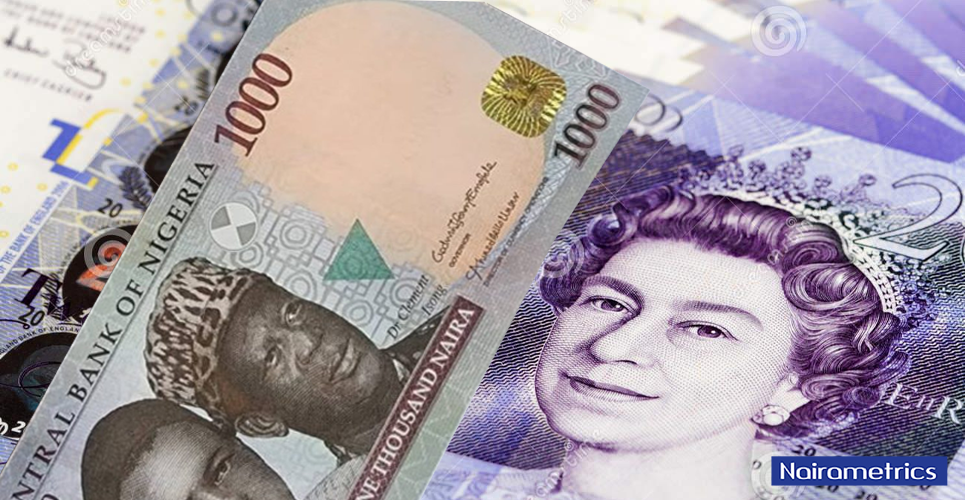
The naira extended its advance against the British pound, with the pound trading at N1,767/£1 as the Nigerian currency sustained its post-rate-cut momentum. The move follows the Central Bank of Nigeria's decision to adjust its monetary policy stance and relax the Monetary Policy Rate to 23%.
Even though lower benchmark rates generally reduce the carry cushion available to foreign investors in naira-denominated fixed income assets, the naira has remained relatively stable. Historical data shows the pound sterling has depreciated significantly against the naira compared with the first quarter of the year, when the Nigerian currency was quoted above N1,900/£1.
Stronger monetary buffers have reinforced the currency. Foreign exchange reserves now exceed $55 billion, and consistent inflows from the oil and gas sector have improved market liquidity and deterred speculative attacks. Growth in domestic liquidity and increased oversubscriptions to Treasury bill and Open Market Operations auctions have supported local demand for naira assets despite the reduction in the policy rate.
In global markets, the British pound remains near its weakest level against the US dollar since June 26, having regained some ground to approach the $1.32 mark as of early Friday. The GBP/USD pair retains a bearish near-term outlook, with the overnight decline below the 1.3200 level reaffirming the risk of retesting year-to-date lows near the 1.3140 region observed in June. The next significant support level is at 1.3100, followed by 1.3000.
On the upside, a reversal may encounter resistance below the 1.3300 level, and a break above it would be required for sustained upward momentum. Further gains would target the 200-day Simple Moving Average at 1.3448.
The US dollar is firm and appears poised to gain for a third consecutive week. Market participants are watching the upcoming US jobs report, with the Nonfarm Payrolls release expected to provide cues on the Federal Reserve's next policy move. The US Dollar Index remains robust near a one-and-a-half-year high, supported by inflation concerns tied to oil prices, which have kept US yields elevated at multi-year peaks. Ongoing geopolitical tensions, particularly between the US and Iran, continue to support the safe-haven dollar.