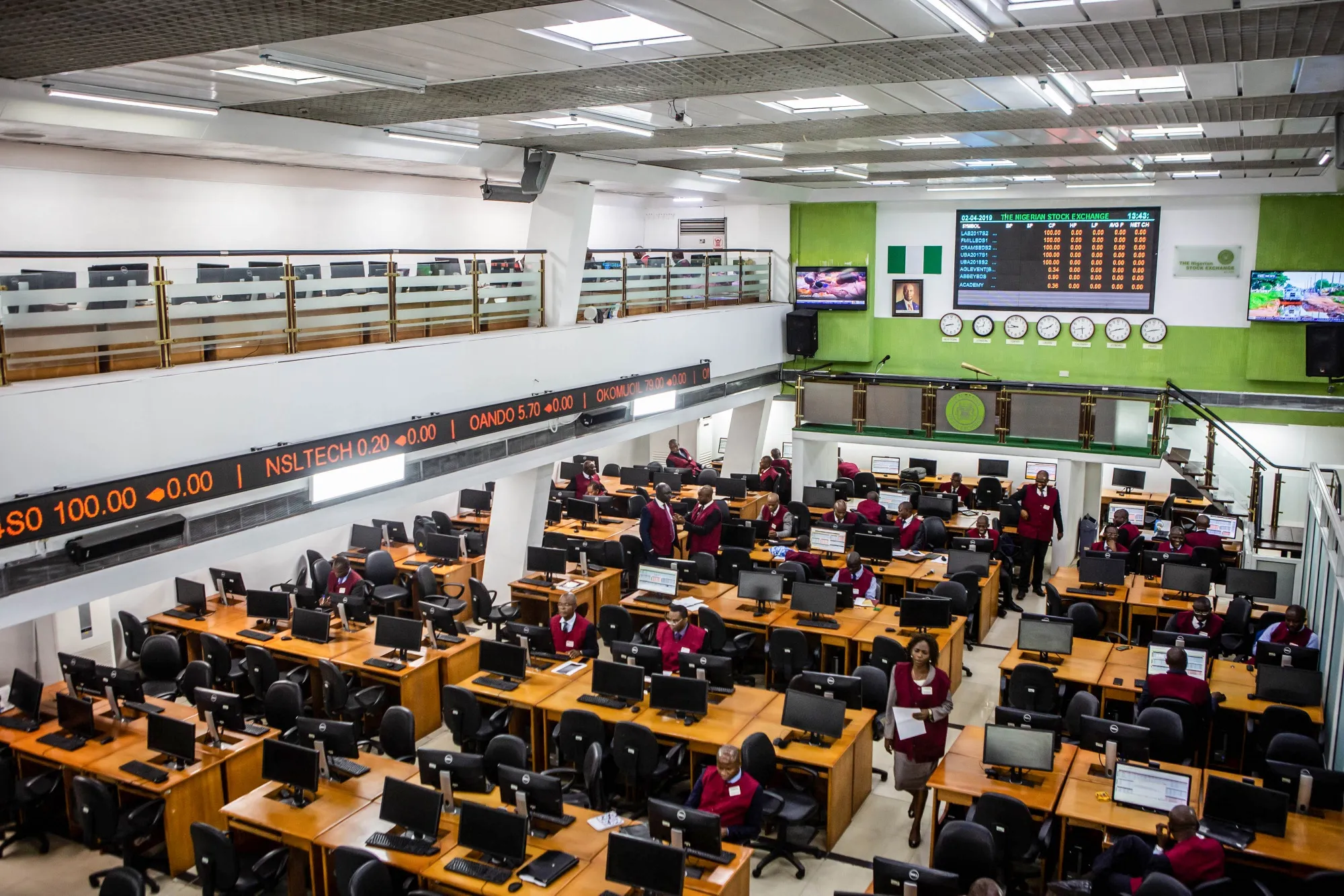
The Nigerian equities market enters the second half of 2026 shaped by two defining forces: the anticipated listing of the Dangote Petroleum Refinery and the accelerating flow of political capital ahead of the 2027 election cycle, according to leading market analysts.
The NGX All-Share Index delivered one of its strongest first-half performances in recent history, surging more than 54.71% year-to-date and briefly touching an all-time high of 252,508 points in May 2026. However, a sharp correction in June erased more than N15 trillion in market capitalisation, pulling the benchmark index to 235,941 points by June 19.
Charles Fakrogha, CEO of ECL Asset Management, described H1 as a period of exceptional returns that exceeded expectations, while urging measured optimism for H2. He identified oil and gas, telecoms, and banking as sectors that performed well and still hold promise, while flagging food security-linked stocks such as Presco and Okomu Oil as emerging opportunities.
Fakrogha also raised concerns about the NGX's transition to T+1 settlement, noting that operators are complaining about infrastructural bottlenecks that cannot be resolved overnight. He urged regulators to carry all stakeholders along before rolling out further reforms.
Abiodun Ogunniyi, Head of Research at GTI Securities, anchored his outlook in a study of pre-election year market behaviour across three previous cycles. He noted that equity markets tend to weaken from June through August and September in pre-election years, with the ASI typically negative in both months. Rising fixed-income yields -- with the 364-day Treasury bill now yielding about 18.34% and OMO bills pricing between 20% and 22% -- are creating genuine competition for equity capital.
"Why should I take an equity position for a 20 to 25% return when I can get almost 20% in the fixed income market right now?" Ogunniyi said. Still, he described the H2 sell-off as a bargain opportunity for investors on the sidelines, adding that a smart investor will accumulate equities over the next three to four months at prices that may not be seen again.
Chief Blakey Okwudili Ijezie of Okwudili Ijezie & Co. offered the firmest conviction on H2 catalysts, predicting that the Dangote Refinery IPO -- expected in September -- will draw significant capital away from the secondary market, causing a temporary dip. "The dip I saw in the market in the last 14 days resulted probably from people leaving the equity markets to buy the private placement. When the IPO comes up in September, a lot of people will exit the NGX to buy it," he said.