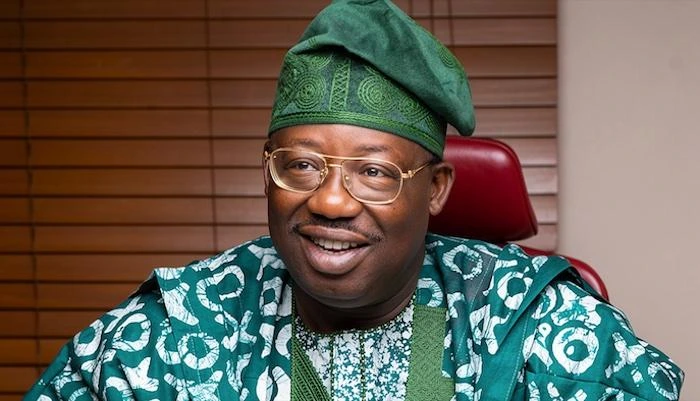
Nigeria's improving macroeconomic indicators must translate into completed infrastructure, reliable public services and lower business costs if households and firms are to feel the benefit, according to Dele Kelvin Oye, Chairman of the Alliance for Economic Research & Ethics Ltd/GTE.
In an interview with Nairametrics, Oye described the Federal Government's 2026 budget performance as mixed. The 2026 Appropriation Act was assented to on 17 April, although the State House said it came into force on 1 April. The National Bureau of Statistics recorded real GDP growth of 3.89 per cent year-on-year in the first quarter and 4.43 per cent in the second, while headline inflation fell from 15.91 per cent in June to 14.63 per cent in September under the rebased CPI series.
Oye cautioned that these gains have not automatically improved living standards. The World Bank reported distributed Federation Account revenues of N10.479 trillion in the first half of 2026, equal to 4.2 per cent of GDP, and capital spending of about N0.7 trillion, or 0.3 per cent of GDP, down from 1.0 per cent a year earlier. The Budget Office, using a broader definition, recorded N4.17734 trillion in first-half capital expenditure.
On revenue and deficit financing, Oye distinguished between the President's December 2025 proposal of N58.18 trillion and the approved budget of N68.32331 trillion, with projected revenue of N36.86668 trillion and a deficit of N31.45663 trillion, an increase of about N10.14 trillion over the proposal. The approved deficit represents about N85 for every N100 of projected revenue, compared with the N70-per-N100 figure often quoted from the original proposal. The financing schedule lists N18.42819 trillion in domestic borrowing and N10.79037 trillion in foreign borrowing, a combined N29.21856 trillion.
He also flagged a discrepancy in the oil-price benchmark: the proposal and BudgIT identified US$64.85 per barrel, while the Appropriations Committee chairman was reported to have said the benchmark was raised from US$65 to US$75.
Capital implementation remains a concern. The enacted budget provides about N32.29 trillion for capital expenditure, roughly 47 per cent of the approved N68.32 trillion budget, but the 2026 MDA capital budget remained at zero as at 30 June because agencies were still using funds from the extended 2025 capital programme, which now runs to 31 December 2026.