Understanding why citizens fail to comply with tax obligations remains a central concern for revenue authorities and policymakers alike. Non-compliance undermines government revenue, weakens public service delivery, and erodes the social contract between the state and its citizens.
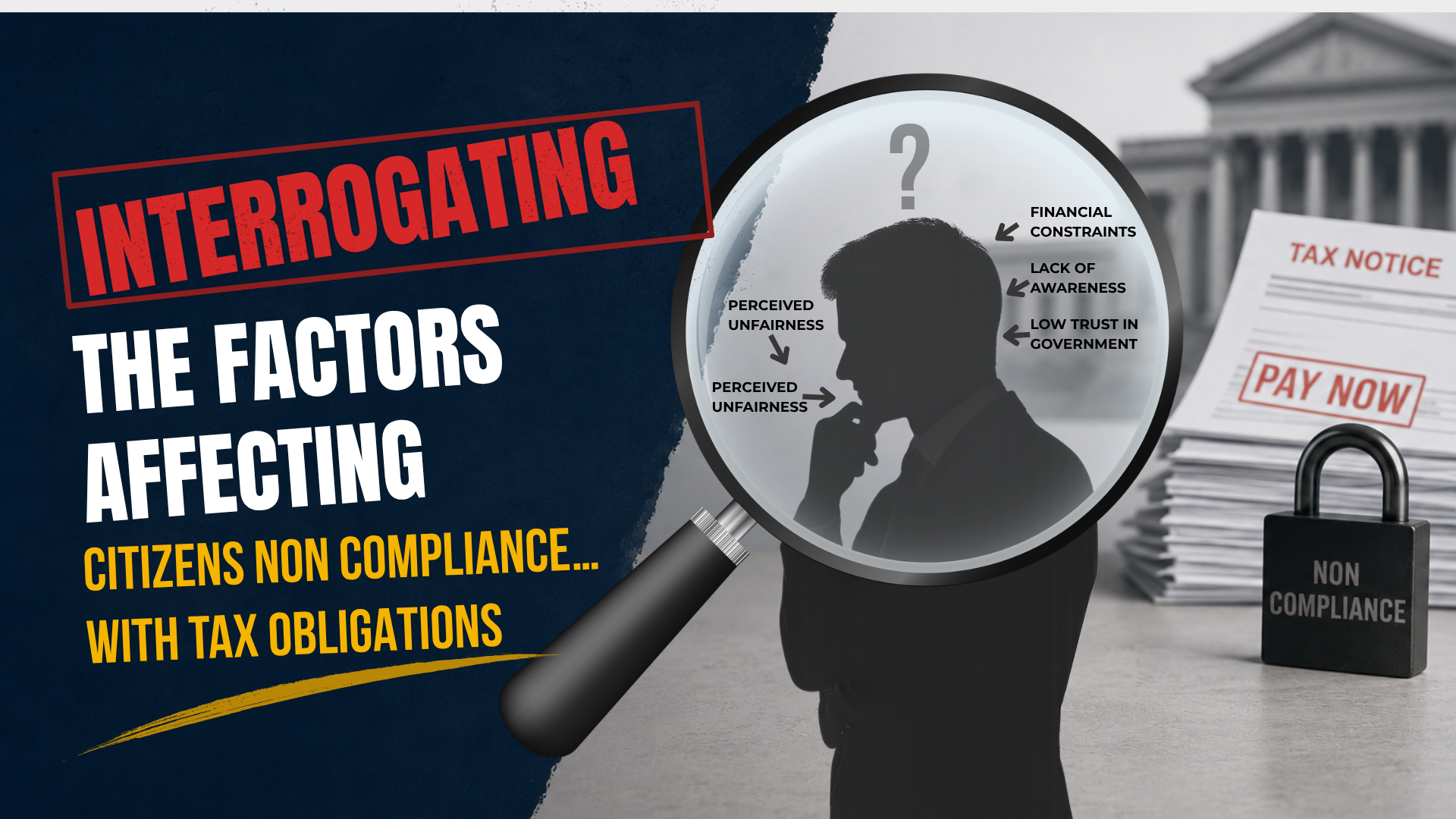
Several interrelated factors are commonly cited in discussions around tax non-compliance. These range from economic pressures and low tax morale to systemic issues such as complex filing procedures, perceived corruption, and a lack of visible public goods in return for taxes paid.
When taxpayers believe that their contributions are not translating into tangible improvements in infrastructure, healthcare, education, or security, voluntary compliance tends to suffer. Similarly, the perception that wealthy individuals or politically connected entities evade taxes with impunity can discourage ordinary citizens from fulfilling their own obligations.
Administrative barriers also play a significant role. Cumbersome registration processes, unclear filing requirements, and limited taxpayer education can confuse even willing taxpayers, pushing them into unintentional non-compliance.
Addressing these challenges requires a multi-pronged approach that combines enforcement with trust-building measures, simplification of tax processes, and visible demonstration of how tax revenues are deployed for public benefit.