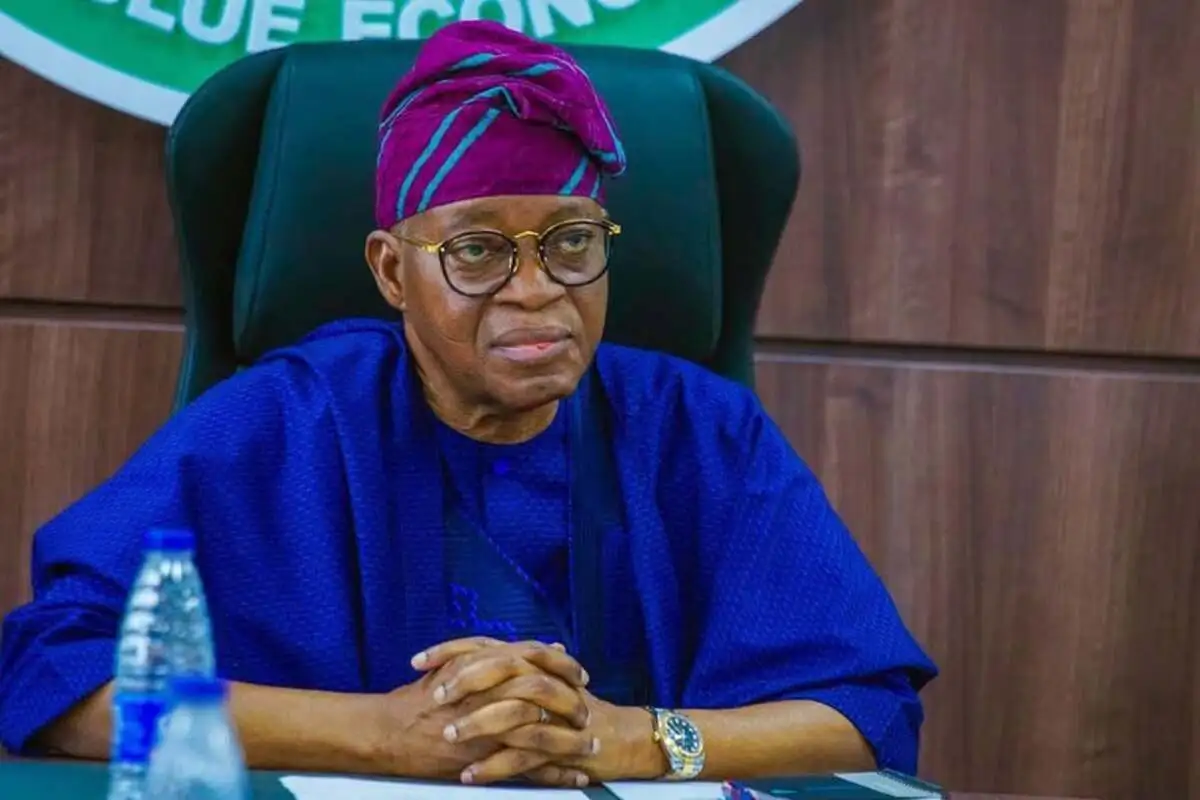
The Federal Government has commenced the release of the Cabotage Vessel Financing Fund (CVFF) to indigenous shipowners, a move intended to ease vessel acquisition and deepen local participation in the maritime economy.
Minister of Marine and Blue Economy Adegboyega Oyetola announced the development on Thursday in Lagos at the 2026 Annual Summit of the Shipping Correspondents Association of Nigeria (SCAN). He was represented by Anastasia Ogbonna, Director of Media at the ministry.
The scheme is designed to address long-standing barriers that have limited local operators' access to capital, including high borrowing costs, demanding collateral requirements and the heavy capital outlay involved in shipping.
Oyetola said he had directed the Nigerian Maritime Administration and Safety Agency (NIMASA) to begin disbursement, open a transparent application portal in January 2026, and raise the number of approved Primary Lending Institutions from five to 12. He described the fund as a strategic instrument for enabling Nigerian operators to acquire modern vessels, grow their fleets and stimulate investment in ship repair, marine engineering and maritime logistics.
The minister added that the government is also considering the establishment of a commercially driven national shipping line through a public-private partnership.
At the summit, UBA Apapa Regional Manager Nelson Edoye said the bank would support indigenous participation across the maritime value chain through tailored financing and trade facilitation solutions. SCAN President Moses Ebosele called for a coordinated strategy to tackle the financial, regulatory and infrastructure constraints facing Nigerian shipowners.
The CVFF was created under Nigeria's coastal shipping framework to provide financial support for indigenous shipowners. The government expects the scheme to help local operators compete for coastal shipping contracts and reduce dependence on foreign-owned vessels. Oyetola projected that the initiative could generate more than 30,000 direct and indirect jobs across shipyards, marine engineering firms and maritime logistics companies.
Ebosele said a stronger indigenous fleet would help Nigeria retain maritime revenue, create jobs, support local shipbuilding and strengthen economic independence. He identified affordable financing, high operating costs, multiple charges, policy inconsistencies and inadequate maritime infrastructure as issues requiring coordinated intervention.