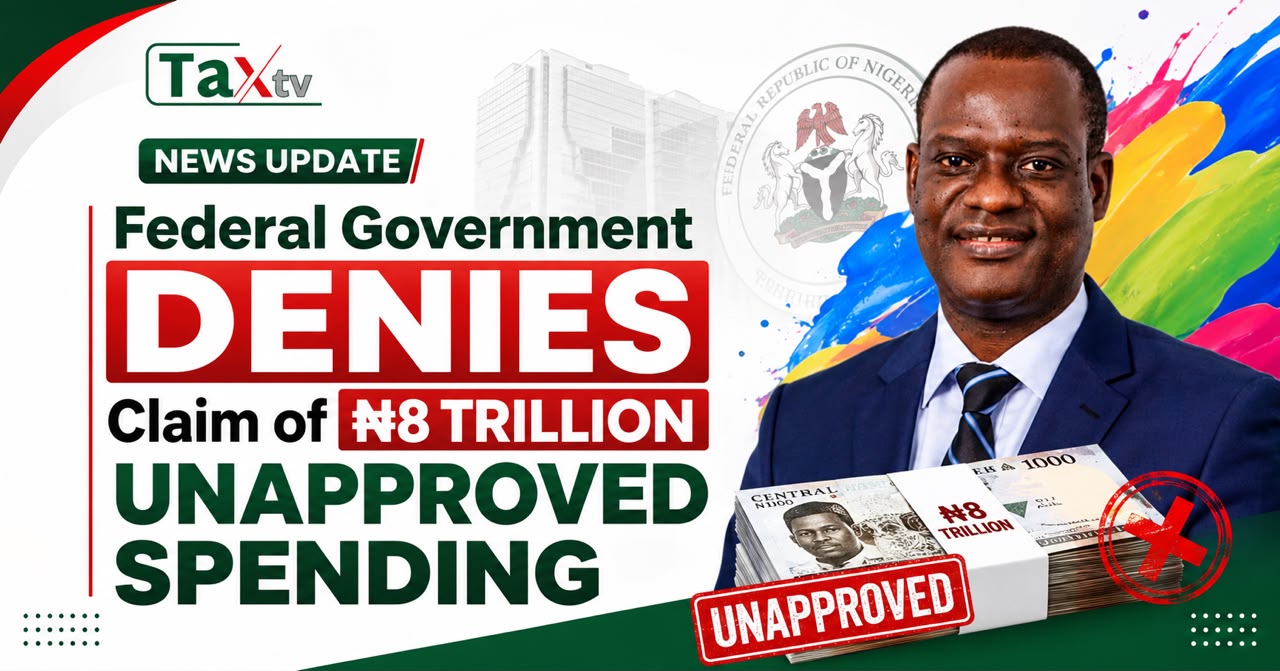
The Federal Government has firmly dismissed allegations that it expended more than ₦8 trillion without legislative approval, describing the assertions as a misreading of public financial data.
Finance Minister Taiwo Oyedele issued a statement on Tuesday clarifying that the narrative of a so-called shadow budget circulating in public discourse is entirely unfounded. He traced the origin of the controversy to interpretations of the International Monetary Fund's 2026 economic report, which captured government outlays recorded outside the conventional annual budget presentation.
Oyedele explained that the figures in question reflect a technical divergence in how multi-year capital projects and statutory legal transfers are classified under international accounting standards, rather than any clandestine or unconstitutional spending. He stressed that the reporting method does not imply illegality or opacity.
The Ministry of Finance maintained that every naira disbursed by the federal government is authorised by law and adheres strictly to the provisions of the Nigerian Constitution. All expenditures, it said, flow through legal channels sanctioned by the National Assembly, encompassing regular annual budgets, supplementary appropriations, and approved rollovers for large-scale infrastructure projects with timelines spanning several fiscal years.
According to the statement, the funds cover routine and entirely lawful operations critical to governance. These include the standard cost of collection incurred by revenue-generating agencies, national debt service obligations, and emergency security interventions. Each category, the government noted, undergoes full audit scrutiny and does not inflate the nation's actual budget deficit.
In a move aimed at eliminating recurring reporting discrepancies and strengthening public confidence, the administration is working to integrate all public expenditure into a single, unified framework. Oyedele disclosed that President Bola Tinubu has already requested the National Assembly to discontinue the practice of running overlapping budget structures, underscoring the government's commitment to comprehensive digital transparency in fiscal management.