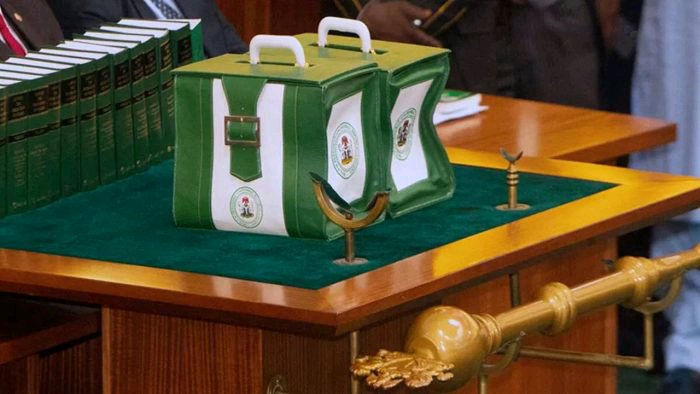
A decade after Hon. Abdulmumin Jibrin shook the National Assembly with allegations of budget padding, Nigeria faces an even more brazen breach of its fiscal controls. This time, a private individual is accused of fabricating an entire government agency and securing a N1.3 billion allocation in the 2026 national budget.
In 2016, Jibrin, then Chairman of the House Committee on Appropriation, accused Speaker Yakubu Dogara and other principal officers of inserting projects worth over N30 billion into the Appropriation Act outside the normal legislative process. He claimed he was pressured to accommodate personal and constituency projects improperly. His eventual suspension for 180 legislative days did little to fix the underlying vulnerabilities.
Fast forward to 2026, and Prince Adeniyi Adeyemi allegedly created a fictitious entity called the Presidential Foreign Intervention Promotion Council. He is accused of forging official documents, operating from an office within the Federal Secretariat, opening multiple bank accounts in the agency's name, and successfully getting the non-existent body listed in the national budget. The Presidency has since disowned the agency, and the matter has been referred to the Economic and Financial Crimes Commission.
Both episodes expose the same structural deficiencies. First, the verification process for new agencies is demonstrably weak. For any body to receive a budget code and allocation, it ought to be established by law or executive instrument. The 2026 case suggests this safeguard can be bypassed or manipulated with relative ease.
Second, documentation and record-keeping across government institutions remain poor. That an individual could allegedly forge appointment papers, secure physical office space at the Federal Secretariat, and open bank accounts without immediate detection points to serious authentication failures. The Budget Office, the Ministry of Finance, and the National Assembly all failed to identify that a non-existent agency had been allocated over a billion naira.
Third, oversight remains critically inadequate. The National Assembly is constitutionally expected to scrutinise budget proposals line by line. Yet questionable allocations persist year after year, suggesting that the approval chain—from executive submission to legislative passage—is fundamentally broken.