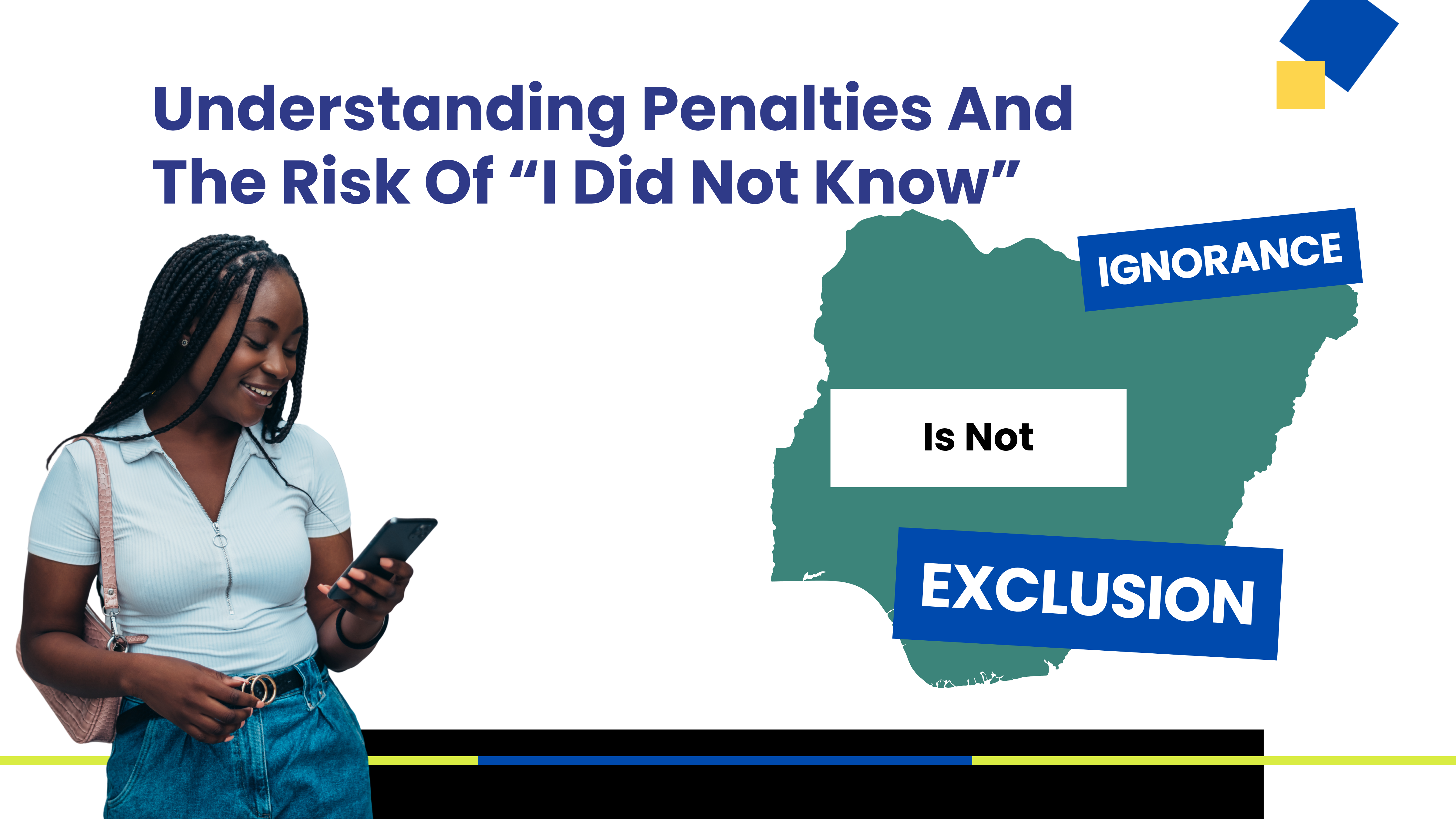
In Nigeria's tax system, the principle that ignorance of the law is no excuse carries significant weight. Taxpayers who claim they were unaware of a filing deadline, a payment obligation, or a regulatory requirement may still find themselves liable for penalties, interest, and in some cases, prosecution.
The maxim *ignorantia juris non excusat* — ignorance of the law excuses no one — is embedded in Nigeria's legal framework and is routinely applied by the Federal Inland Revenue Service and State Internal Revenue Services when enforcing compliance.
Common areas where the "I did not know" defence fails include failure to file annual tax returns by the statutory deadline, non-remittance of Value Added Tax, under-declaration of income, and failure to register for relevant tax types when commencing business operations.
Penalties for non-compliance can be substantial. Under the Companies Income Tax Act, late filing attracts a penalty of N25,000 in the first month and N12,500 for each subsequent month of default. For individuals under the Personal Income Tax Act, penalties for late filing similarly accumulate over time. VAT non-remittance carries additional penalties and interest charges.
Tax professionals consistently advise that taxpayers should proactively seek clarification from tax authorities or engage qualified consultants rather than assuming obligations do not apply to them. Proactive compliance remains significantly less costly than penalty exposure.
Regulatory developments, including increased automation of tax administration and data-sharing among government agencies, mean that non-compliance is more likely to be detected than in previous years. The risk of relying on ignorance as a defence has therefore increased materially.