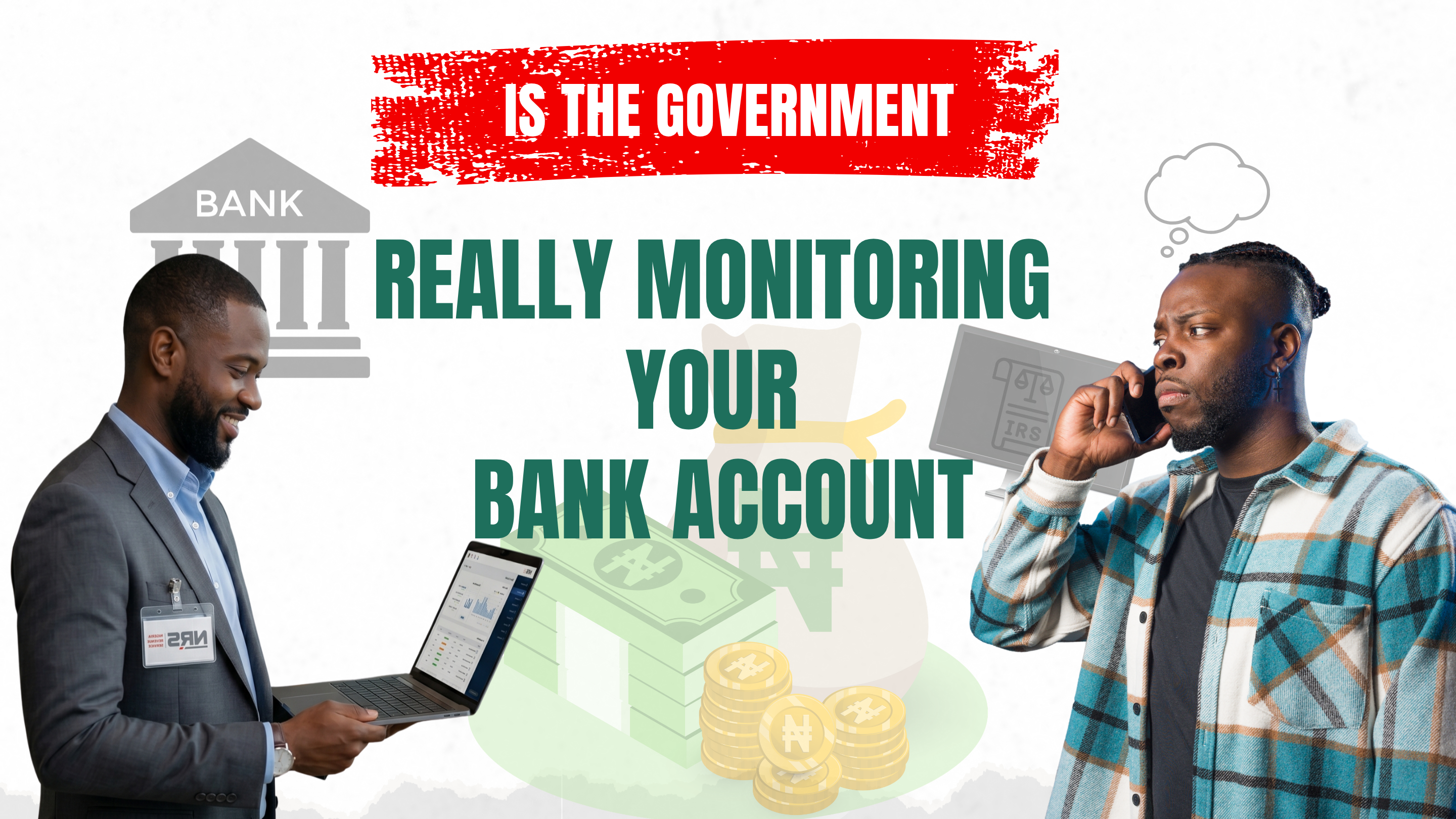
Concerns about government surveillance of personal bank accounts have circulated widely among Nigerian taxpayers, fuelled by social media rumours and a limited understanding of what the law actually permits. The question is not whether the Federal Inland Revenue Service (FIRS) can access bank records — it legally can, under specific conditions — but rather how, when, and why such access is triggered.
Under the Finance Act 2019, which amended the Personal Income Tax Act and other statutes, FIRS gained the power to request information from banks about customers for tax purposes. The legislation requires financial institutions to file annual returns showing transactions above specified thresholds and to disclose information when FIRS obtains a court order or where a taxpayer is under investigation.
Crucially, this is not blanket surveillance. The law does not grant tax officials unrestricted, real-time access to private bank accounts. Instead, information requests are typically linked to specific compliance activities: a taxpayer under audit, a mismatch between declared income and observed financial activity, or intelligence gathered from third-party data sources such as property registries and company filings.
Nigeria has also adopted the Common Reporting Standard, a global framework that enables the automatic exchange of financial account information between tax authorities across jurisdictions. This means that accounts held by Nigerians abroad can, in certain circumstances, be reported back to FIRS, and vice versa. Again, the mechanism is triggered by defined reporting criteria, not continuous monitoring.
The myths about government spying persist partly because the distinction between data gathering and active surveillance is poorly communicated. When banks request updated identification documents or ask customers to complete self-certification forms, many assume this signals government intrusion. In reality, these are routine know-your-customer obligations imposed by financial regulators, not tax-specific measures.
That said, the direction of policy is clear: tax authorities are becoming more data-driven, and the space for concealing income is narrowing. The FIRS has invested in technology platforms that integrate data from multiple sources, including the Corporate Affairs Commission, land registries, and customs. Combined with bank reporting obligations, this creates a progressively tighter compliance net.
For the average compliant taxpayer, the practical implication is straightforward. Ensuring that tax filings accurately reflect actual income and that large deposits or transfers can be explained by legitimate, declared sources remains the most effective safeguard against any inquiry. The government may not be watching every account, but it has the tools to look when circumstances warrant.