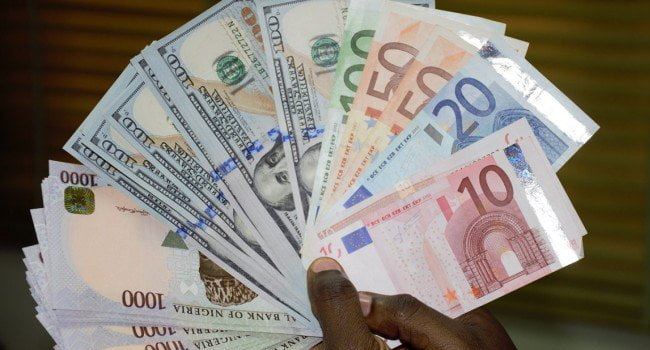
The naira closed at N1,497 per euro, according to the latest Central Bank of Nigeria (CBN) data, breaching the N1,500 mark for the first time since April 2024.
The move reflects the euro's broad-based weakness. The common currency fell to its lowest level against the US dollar since May 2025, declining 0.8 percent to $1.1161 during Asian trading sessions as hedge funds joined the sell-off.
For most of 2023, the naira traded below N1,000 per euro. Following Nigeria's 2024 foreign exchange market reforms and the naira's devaluation, the rate rallied above N1,500 and reached as high as N1,800 per euro. The euro-naira pair has since declined from levels near N1,684 recorded late last year to the current N1,497.
Against the dollar, the naira has remained within a relatively narrow band of N1,327 to N1,330 in the official Nigerian Foreign Exchange Market (NFEM), supported by successive central bank liquidity injections and stable foreign reserves. In the parallel market, the dollar has predominantly traded between N1,370 and N1,390, narrowing the spread between official and parallel rates and reducing arbitrage opportunities.
The CBN's foreign exchange reforms, tighter monetary policy, and greater transparency in official windows such as the Nigerian Autonomous Foreign Exchange Market (NAFEM) have helped contain speculative demand.
On the macroeconomic side, increased utilisation of domestic refining capacity, notably at the Dangote Refinery, has lowered foreign exchange spending on petroleum imports and conserved reserves. Strong agricultural exports and high crude oil prices have also supported the country's forex surplus with the Eurozone.
In the Eurozone, investor concerns over political and fiscal instability have weighed on the euro. News of preparations for an early election in Spain added to regional uncertainty and affected French bond markets. The premium investors demand to hold French debt over German bunds rose to its highest level since 2011. Market sources said short-term funds in Asia offered dollars for euros, fuelling options-related selling. Polls project far-right candidate Marine Le Pen and far-left candidate Jean-Luc Mélenchon to advance to the second-round runoff in France.