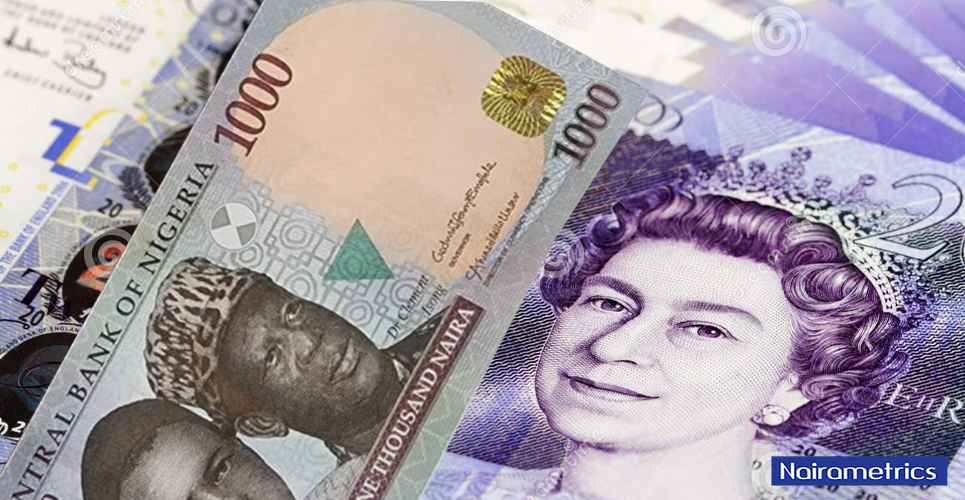
The Nigerian naira maintained its relatively stable run against the British pound on the domestic foreign exchange market, with the Central Bank of Nigeria's latest data showing the GBP/NGN spot rate settling at N1,850/£1.
This marks a continued period of stability for the naira against the British currency. The naira's best performance against sterling this year came on April 16, when it reached roughly N1,814/£1. Year-to-date, the naira has appreciated approximately 6.6% against the pound, having opened the year at N1,948.9/£1.
In the official Nigerian Foreign Exchange Market (NFEM) window, the naira traded within a range of N1,350/$ to N1,370/$. However, at the unofficial market, the British pound commanded higher rates, selling at about N1,900/£1 to buy and N1,925/£1 to sell, reflecting sustained demand for foreign currency from importers and travellers.
Market operators note that the pound remains a high-demand currency in Nigeria, driven by school fee payments abroad, medical treatments, offshore business transactions, and international travel.
The CBN has continued its intervention strategy alongside a tight monetary policy stance, with the Monetary Policy Rate held firmly at 26.5%. The central bank's successful clearance of the FX backlog has attracted international portfolio investors to Nigerian debt instruments, supporting a steady supply of foreign currency.
Higher crude oil production and a solid rise in energy prices during the first half of the year have boosted Nigeria's gross foreign reserves, while remittance flows from Nigerians abroad continue to provide additional hard currency supply.
Meanwhile, on the global stage, the British pound sterling was trading around $1.34 against the US dollar. Market attention is focused on the upcoming central bank meetings, with the Federal Reserve and the Bank of England both due to announce policy decisions this week. The Bank of England's meeting follows the UK's latest Consumer Price Index release on Wednesday.
Sterling had earlier risen toward 1.3450 following a significant geopolitical development involving a US-Iran ceasefire deal and the reopening of the Strait of Hormuz, which sent crude prices lower. However, gains were pared as traders shifted focus back to macroeconomic policy and the looming central bank decisions.
Analysts note that cable has mounted a recovery from May lows but faces resistance near the 1.3500 psychological level. A consolidation range around current levels is expected as markets await the pivotal policy announcements due this week.