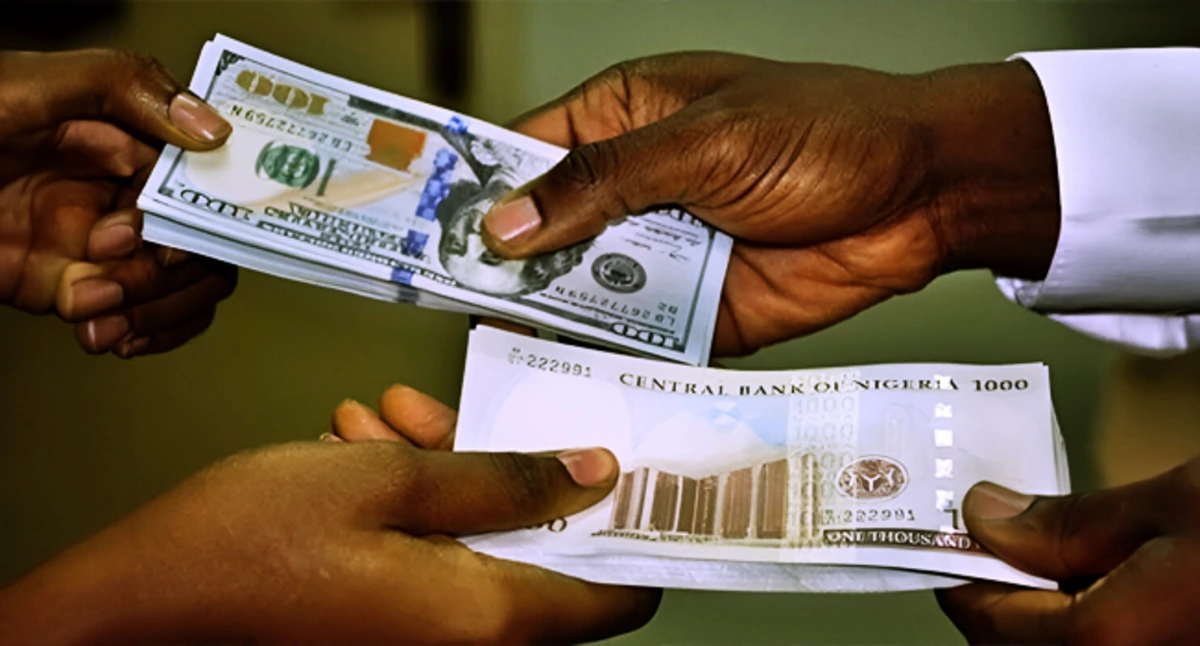
The naira firmed against the United States dollar on Monday, October 26, 2026, closing at N1,365/$, a marginal improvement from the N1,370/$ recorded on Friday, October 23.
Central Bank of Nigeria (CBN) data showed the currency traded within a band of N1,359/$ and N1,380/$ during the session, with a weighted average rate of N1,367.61/$.
Despite the day-on-day recovery, the local currency remained 2.5% weaker than its October 2 closing level of N1,332/$. The movement reflects a late-month depreciation after the naira held a relatively narrow range around N1,330/$ through the first three weeks of October.
Key trading figures from the session showed the naira's closing rate matched the October 22 close of N1,365/$. The session high was N1,380/$, the low was N1,359/$, and the weighted average stood at N1,367.61/$ against a simple average of N1,368.39/$. Interbank trading recorded 201 deals, with turnover of approximately N614.25 million.
The exchange-rate movement occurred against a backdrop of elevated foreign exchange activity across the economy. Nigeria's FX utilisation reached a record $7.61 billion in June 2026, a 78.1% rise from $4.27 billion in June 2025, driven largely by invisible transactions covering services and other non-goods payments.
For 2025, total FX utilisation climbed 91.1% to $50.93 billion, the highest annual level since 2019. Invisible transactions accounted for $30.99 billion while imports represented $19.94 billion.
On the supply side, Nigeria recorded total foreign exchange inflows of $109.9 billion in 2025. Autonomous inflows rose 25.12% to $70.54 billion, or 64.21% of total inflows. These autonomous inflows represent foreign exchange entering the market through sources outside direct CBN supply, including private-sector transactions and other independent channels.
Despite the scale of inflows recorded in the preceding year, the naira weakened from N1,332/$ at the start of October to N1,365/$ by October 26. The currency's near-term direction will depend on market conditions, particularly the balance between demand and supply.