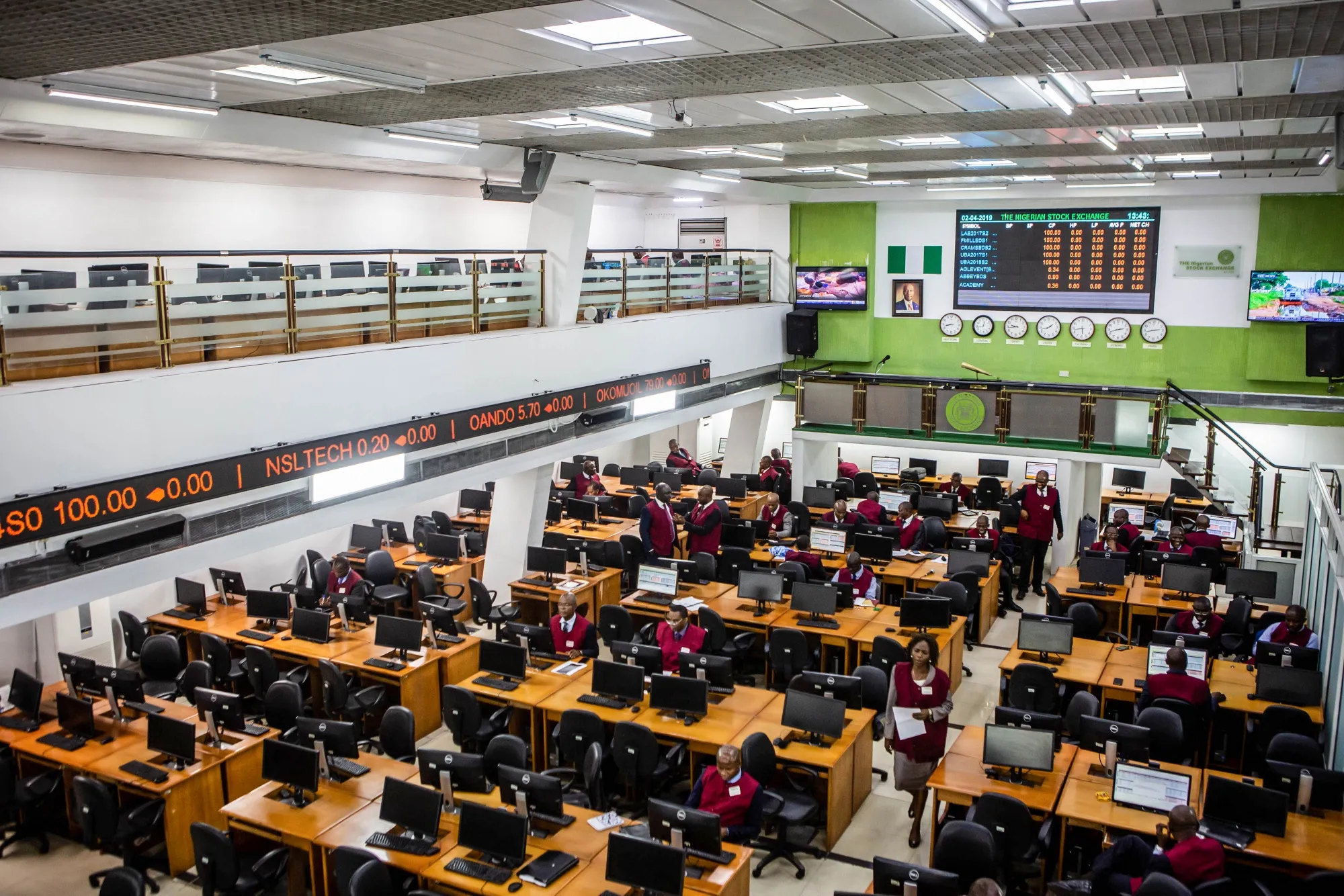
The Nigerian equities market relapsed into bearish territory on Monday, June 15, as investors resumed profit-taking across oil and gas and banking heavyweights, eroding approximately N945 billion in market value.
The NGX All-Share Index declined by 0.60% to close at 243,271.57 points, while market capitalisation settled at N156.03 trillion, reflecting the same percentage decline.
The sell-off was driven largely by losses in **Aradel Holdings**, which fell 5.7%, **First HoldCo** (down 7.3%), **Transcorp** (down 5.0%), and **Oando** (down 9.8% to N47.80). These outweighed gains recorded in selected insurance and hospitality stocks.
The oil and gas sector emerged as the worst-performing segment, losing 3.2%, as investors reacted to easing geopolitical tensions following the reopening of the Strait of Hormuz and a suspension of hostilities — developments that reduced immediate concerns over global crude supply disruptions.
The Banking Index declined by 1.0%, reflecting renewed profit-taking in major banking counters after their strong performance earlier in the month. The Insurance Index edged 0.7% lower, while the Consumer Goods Index dipped 0.4%. The Industrial Goods index closed flat.
Market breadth was firmly negative, with 47 decliners against 17 gainers, signalling that selling pressure was widespread rather than concentrated in a few large-cap stocks.
**Top gainers** included Royal Exchange (+10.00% to N1.65), Ikeja Hotel (+9.97% to N47.45), Consolidated Hallmark Holdings (+9.58% to N9.04), University Press (+9.09% to N6.00), and AXA Mansard Insurance (+8.73% to N13.70).
**Top losers** were International Energy Insurance (-9.99% to N6.40), eTranzact International (-9.97% to N14.90), Neimeth Pharmaceuticals (-9.94% to N7.70), Oando (-9.81% to N47.80), and Abbey Mortgage Bank (-9.65% to N10.30).
Trading activity was mixed. Total volume declined 56.70% to 744.99 million shares, while the value of transactions fell 31% to N36.44 billion. However, the number of deals surged 62.58% to 80,977 transactions, suggesting heightened participation by both retail and institutional investors despite weaker turnover.