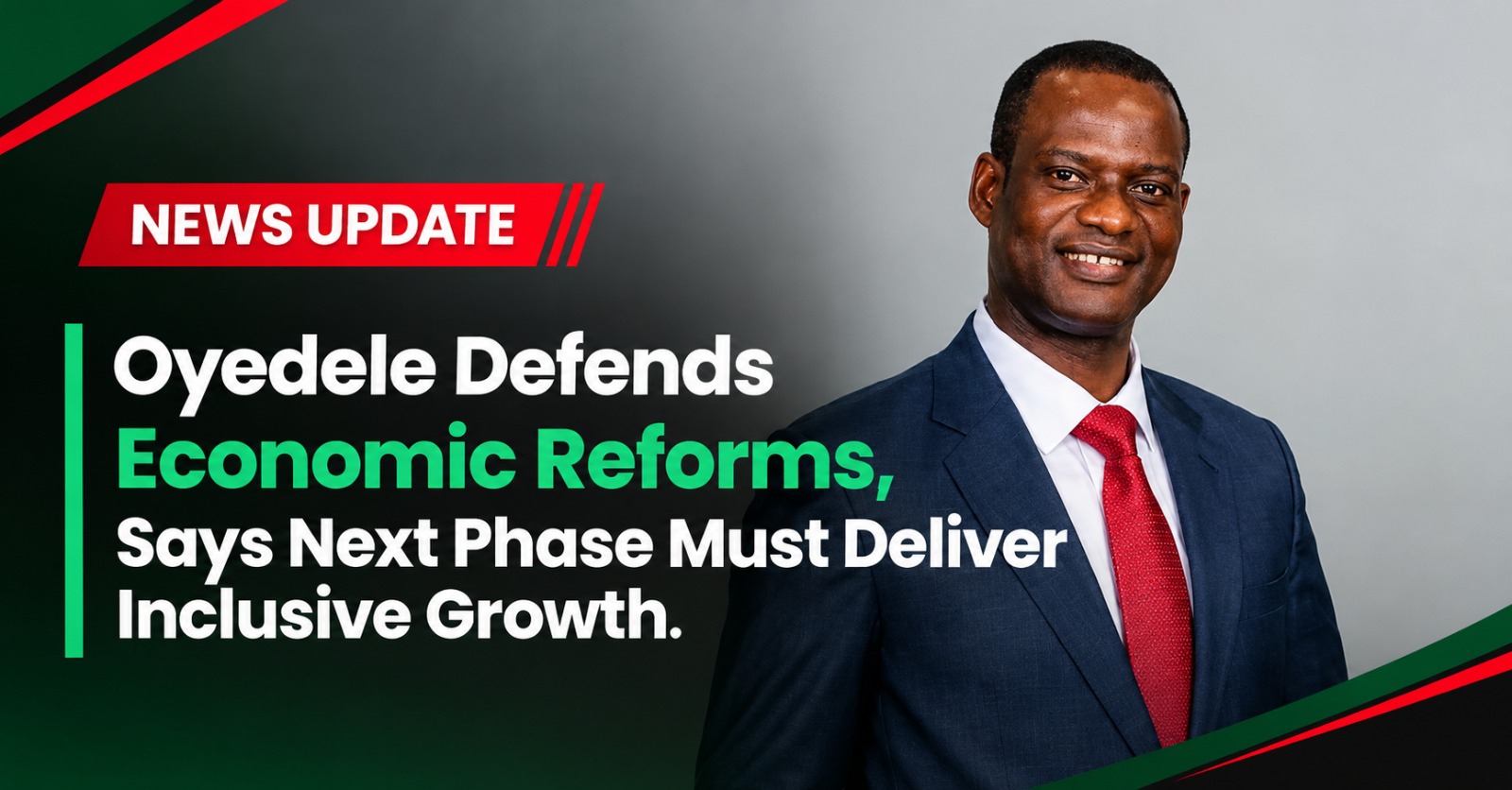
Finance Minister and Coordinating Minister of the Economy Taiwo Oyedele has backed the Federal Government's reform programme, describing the measures as essential responses to long-running structural weaknesses in Nigeria's economy. Speaking at Chatham House in London, he nonetheless conceded that many citizens have yet to feel meaningful relief from the rising cost of living.
Mr Oyedele addressed the scrapping of petrol subsidies, foreign exchange market reforms, inflation, investment and the administration's efforts to convert macroeconomic stability into broad-based improvements for households.
The minister argued that the policies introduced under President Bola Tinubu were designed to remove economic distortions and place public finances on a sustainable footing. Government officials have consistently defended the removal of petrol subsidies and the overhaul of the foreign exchange regime as necessary steps towards better fiscal management, stronger investor confidence and reduced pressure on public resources.
According to the minister, abandoning the reforms would expose Nigeria to even greater economic difficulties. He also said the next phase of policy should depend more on private domestic and foreign investment than on additional public borrowing. Reuters reported that he ruled out any return to petrol subsidies and indicated that the government wants investment directed towards power, transport and agriculture.
On inflation, Mr Oyedele drew a distinction between improving headline figures and the daily reality facing households. He acknowledged that a lower headline inflation rate does not automatically mean food has become affordable or that families have regained lost purchasing power. Food inflation, he said, remains too high, and macroeconomic stability carries little meaning for households still struggling to afford basic meals.
He pointed to low agricultural yields, seasonal farming patterns, post-harvest losses, weak storage and transport systems, and insecurity in farming areas as key drivers of food prices. Sustainable reduction in inflation will therefore require more than monetary and fiscal adjustments; it will also depend on better food production, distribution and storage.
Looking ahead, the government plans to focus on turning stability into faster and more inclusive growth by attracting private investment, expanding infrastructure, increasing domestic production and supporting agriculture and agro-processing. The minister also highlighted the cash-transfer programme, which he said has reached more than 10 million households through digitally processed payments tied to verified national identity records. The scheme is meant to provide direct support while longer-term measures take effect.