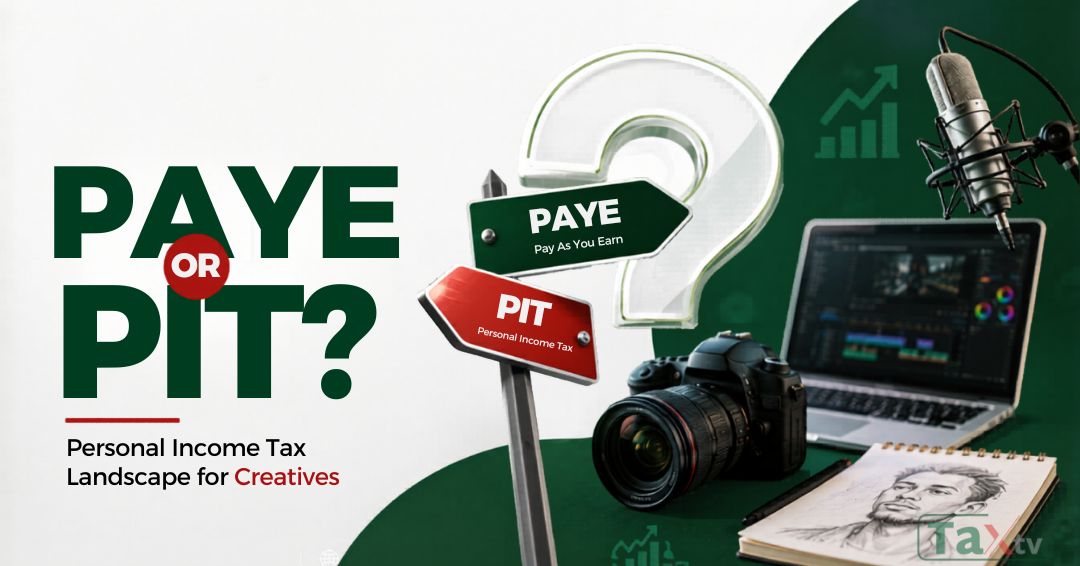
Many taxpayers, and even some professionals, use the terms Personal Income Tax (PIT) and Pay As You Earn (PAYE) as though they mean the same thing. They do not. The distinction matters for compliance, filing obligations, and understanding exactly who owes what to which tax authority.
PIT is the tax itself. It is the levy imposed by law on the income of individuals, communities, families, and executors or trustees of estates. The enabling legislation is the Personal Income Tax Act (PITA), which sets out who is chargeable, what income is taxable, the applicable rates, and the reliefs available.
PAYE, on the other hand, is merely a method of collecting PIT. It is the system under which an employer deducts tax from an employee's salary or wages at source and remits it directly to the relevant state internal revenue service. PAYE is not a separate tax; it is a withholding mechanism designed to ensure that tax on employment income is collected in real time, month by month, rather than in a lump sum after the year ends.
The distinction becomes clearer when considering who falls under each regime. PAYE applies strictly to employees — individuals in a master-servant relationship where the employer controls what work is done, how it is done, and when it is done. The employer bears the responsibility for calculating, deducting, and remitting the tax by the 10th day of the following month.
Self-employed individuals, partners in a partnership, and sole proprietors also owe PIT, but they do not fall under the PAYE net. They are required to file annual returns directly with the tax authority, typically using the "direct assessment" route. Their tax is computed on the profits of their trade, business, profession, or vocation and is paid in accordance with notices issued by the tax authority.
Nigeria's PIT rates are progressive, ranging from 7 per cent on the first band of taxable income to 24 per cent on income above the highest threshold. A Consolidated Relief Allowance (CRA) — calculated as the higher of one per cent of gross income or a fixed sum, plus 20 per cent of gross emoluments — reduces the taxable base before the graduated rates are applied.
Both PAYE and direct assessment feed into the same PIT framework and are governed by the same PITA provisions. The difference is purely administrative: one is collected at source by employers, the other is self-assessed and paid directly by the taxpayer.
Understanding this distinction has practical consequences. An employee who changes jobs mid-year must ensure that cumulative tax calculations account for income earned from the previous employer. A business owner who hires his first staff must register for PAYE and begin monthly remittances. And a professional who earns both employment income and consultancy fees may find that while PAYE covers the salary, the consultancy income must be declared under direct assessment.
In essence, every PAYE remittance is PIT, but not all PIT is collected through PAYE. The confusion is understandable — both lead to the same tax — but treating them as synonyms can obscure the distinct compliance pathways each demands.