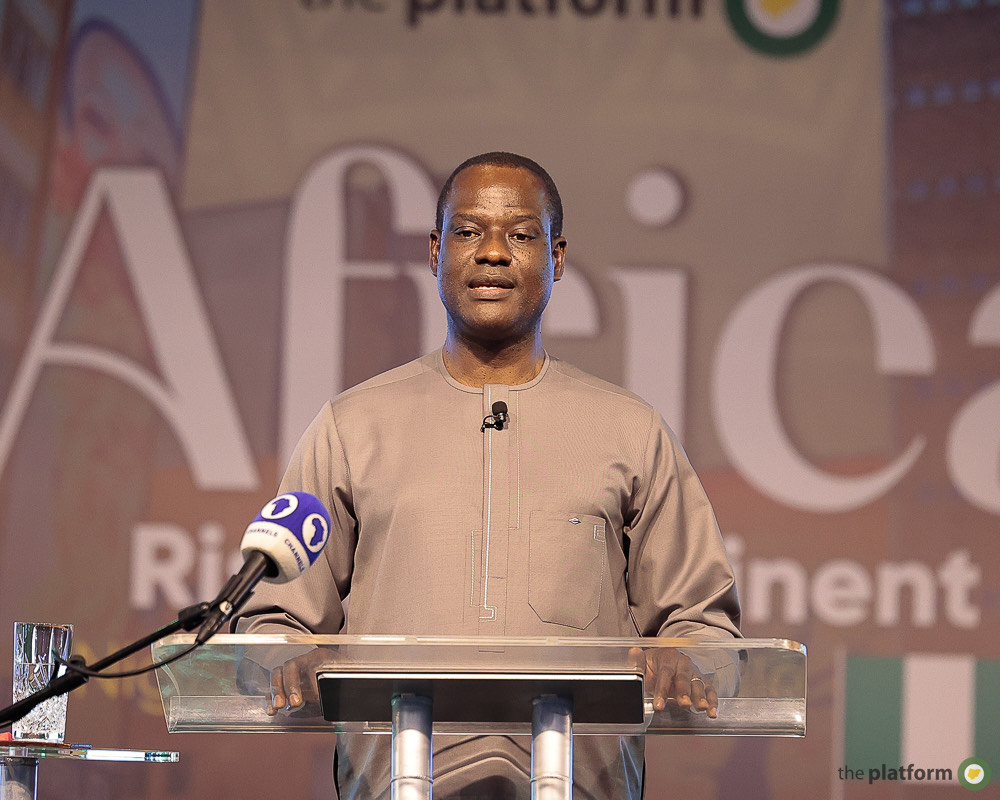
Finance Minister Taiwo Oyedele, who chairs the Presidential Committee on Fiscal Policy and Tax Reforms, has stated that achieving single-digit inflation in Nigeria could deliver fiscal savings of more than $10 billion.
Speaking on the sidelines of the International Monetary Fund meetings in Thailand, Oyedele said lower inflation would help create the conditions for interest rates to fall to comparable levels, easing pressure on public finances. He stressed that closer coordination between monetary and fiscal authorities has become more important as the Central Bank of Nigeria prepares to make inflation targeting the next phase of its reform programme.
"We are enhancing our collaboration between monetary and fiscal authorities. And already we are aware that the monetary authorities are piloting from monetary to inflation targeting, which means our collaboration is now even more important than it has ever been," Oyedele said.
He added: "From the fiscal side, whatever we need to bring inflation to a single digit, thereby creating the conditions for interest rates to also be single digit, will save the fiscal side as of 2026 numbers more than US$10 billion." He described the effort as a top priority.
The minister also credited the central bank's management of the foreign exchange market with supporting currency stability. "The good thing is, because of the way the central bank has been able to help us manage the FX environment generally, we've seen the naira not only being stable but steadily appreciating," he said.
Nigeria's headline inflation rate eased marginally to 15.39% in August 2026 from 15.43% in July, extending the disinflation trend for a third consecutive month. Despite the moderation, household perceptions of high prices remain elevated. A CBN survey showed that the share of Nigerian households that perceived inflation as high rose to 77.2% in September 2026, from 67.2% in August. Separately, 68.4% of Nigerians earning below N70,000 perceived inflation as high in August, the largest share among the income categories surveyed.
The International Monetary Fund has raised Nigeria's 2026 economic growth forecast to 4.2% and projected growth of 4.3% in 2027 in its 2026 World Economic Outlook. The World Bank also raised its 2026 growth estimate for Nigeria to 4.3%, up from 4.0% in 2025, and projected annual growth of 4.4% in both 2027 and 2028.