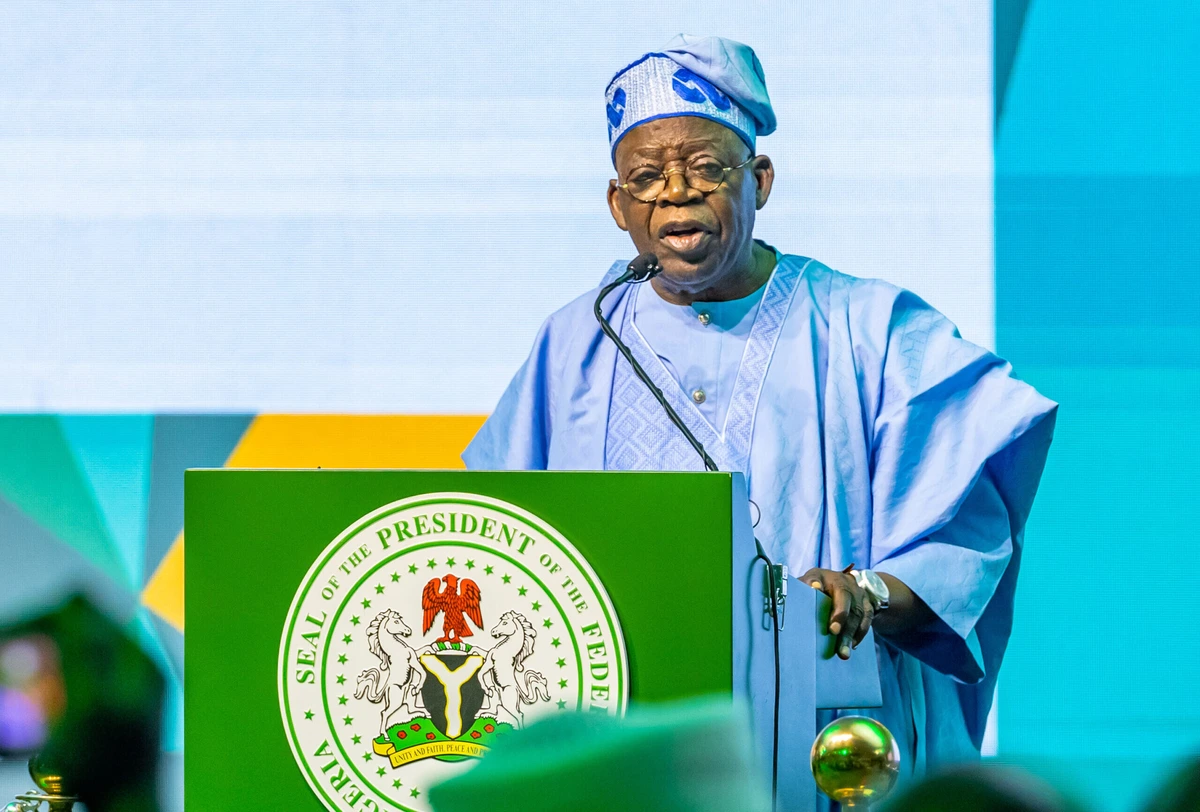
President Bola Tinubu used his Independence Day broadcast on Thursday, October 1, 2026, to declare that Nigeria has moved beyond the difficult phase of economic reforms and entered an "age of prosperity". Speaking as the country marked its 66th independence anniversary, he said the administration's immediate focus would shift to lowering the cost of living, creating jobs and expanding economic opportunities.
The address, themed "From Reforms to Prosperity", positioned the next phase of the government's economic agenda around shared prosperity rather than the corrective measures of the past three years.
"The emergency treatment is over. The foundation has been repaired. The central economic task before us has changed," Tinubu said. "For three years, our overriding purpose was to correct our nation's course. Now, our purpose is simple: shared and widespread prosperity."
The President argued that successive administrations had deferred difficult economic decisions, allowing distortions to deepen over time. He likened the pre-reform economy to a cancer patient who must endure painful treatment, and said that by 2023 poverty was rising and hope was nearly gone. He insisted the reforms confronted structural weaknesses rather than creating them, and cautioned against returning to what he described as "addictive subsidies".
Citing economic gains, Tinubu said growth exceeded 4% in 2026, with both the oil and non-oil sectors contributing to stable expansion. He said oil theft had declined, inflation had fallen substantially from its peak, foreign reserves had been rebuilt and the foreign exchange market had stabilised. Nigeria recorded more than $6 billion in non-oil export revenue in 2025, which he described as the highest in the country's history, while foreign direct investment had continued to rise each year.
On the cost of living, the President said the priority would be to reduce the expense of producing and transporting goods. He outlined plans to expand mechanised irrigation and dry season farming, improve access to seeds and fertiliser, increase agricultural mechanisation and invest in storage and transportation, alongside ongoing spending on roads, railways and ports.
Job creation, enterprise development and industrial growth would sit at the centre of the next phase, according to Tinubu, who said gas resources would power new industries, digital connectivity would reach underserved communities, and businesses would receive infrastructure and financing support. He expressed an ambition for young Nigerians to build technology companies valued at more than $1 billion.