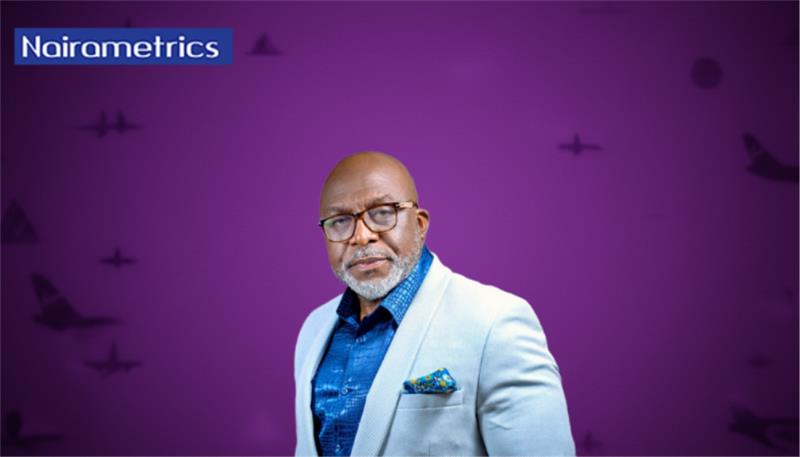
United Nigeria Airlines Executive Chairman, Prof. Obiora Okonkwo, has stated that domestic airlines were servicing outstanding Ticket Sales Charge (TSC) debts under repayment plans agreed with the Nigeria Civil Aviation Authority (NCAA) before industrial action by aviation unions disrupted the process.
Okonkwo made the disclosure on Thursday at the 30th annual conference of the League of Airport and Aviation Correspondents (LAAC) in Lagos, which had the theme “Towards a Sustainable Aviation Industry: Balancing government revenue demands with sector growth.”
His comments came weeks after the National Union of Air Transport Employees (NUATE) and the Air Transport Services Senior Staff Association of Nigeria (ATSSSAN) began industrial action over alleged non-remittance of the statutory 5% TSC by some airlines.
Okonkwo said airlines had been meeting their TSC obligations before February 2026, when the Gulf crisis pushed aviation fuel prices to about N3,300 per litre and increased pressure on operators. The Airline Operators of Nigeria (AON) subsequently sought relief from the Federal Government, which approved a 30% waiver on the charges.
“Before February this year, there were no payment problems. All airlines were paying. The AON issue only became a problem because of the Gulf crisis. AON was the first to cry out,” he said.
Following the waiver, Okonkwo said airlines met with the NCAA and the Ministry of Aviation to establish a structured repayment framework under which operators were required to pay 10% of legacy debts within a specified period and settle the balance through instalments.
“The airlines complied with this directive. The airlines did this. The director met with operators in Lagos and Abuja, and we developed a payment plan. This plan was in place. We were making regular payments according to the agreement we had with the NCAA until we heard about the labour union problem,” he said.
He added that United Nigeria opened joint accounts with the NCAA at Nigerian banks to allow the authority to withdraw agreed payments directly, and he questioned the description of airlines as non-compliant.