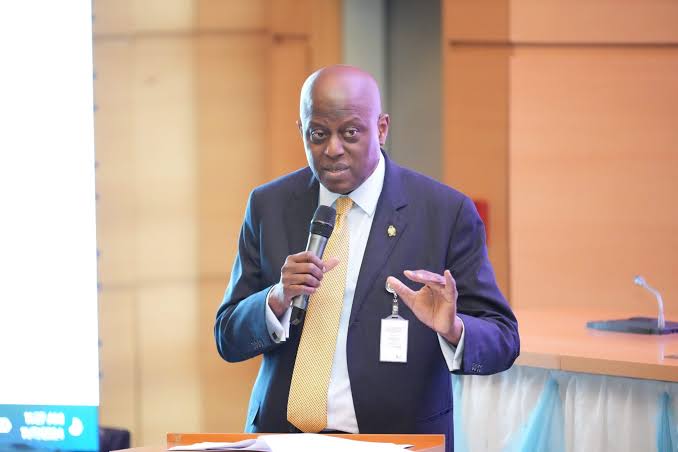
The Central Bank of Nigeria (CBN) intends to strengthen cross-border payment arrangements with China, with Governor Olayemi Cardoso set to lead discussions during a forthcoming trip to Beijing. The move aims to deepen financial cooperation and support bilateral trade and investment between the two countries.
Cardoso disclosed the plan at a press briefing following Nigeria's participation in the 2026 Annual Meetings of the International Monetary Fund (IMF) and World Bank Group held in Bangkok, Thailand. He said he had already met Pan Gongsheng, Governor of the People's Bank of China, to explore ways of reinforcing financial cooperation. The conversations covered cross-border payments, settlement arrangements, financial technology and trade finance.
"Nigeria would build on the discussions during an upcoming visit to Beijing, with emphasis on facilitating cross-border payments, supporting trade and investment, and strengthening financial intermediation between the two countries," Cardoso said.
The Beijing visit is expected to advance the talks and examine arrangements that could make transactions between Nigerian and Chinese businesses smoother. More efficient cross-border payment systems could help bilateral trade by reducing friction in international settlements, although the CBN has not published specific implementation plans or timelines.
Beyond China, Cardoso said his meetings with international credit rating agencies, including Standard & Poor's and Moody's, centred on Nigeria's economic outlook and the medium-term prospect of attaining investment-grade ratings. Those discussions underscored the need for consistent economic policies, credible institutions and effective coordination between fiscal and monetary authorities.
On monetary policy, Cardoso participated in an IMF seminar on central bank decision-making under uncertainty, where he discussed the CBN's efforts to strengthen policy decisions, transparency and communication. He cited the September cut in the monetary policy rate (MPR) from 26.5% to 23% as an illustration of the role of credible institutions and clear communication. The 350-basis-point reduction reflected a shift in the CBN's monetary policy stance amid changing economic conditions.
Cardoso stated that the CBN would maintain its focus on price stability, monetary discipline and safeguarding financial system stability, with single-digit inflation remaining the medium-term objective. He acknowledged the patience and resilience of Nigerians through a difficult period of economic adjustment and said the priority was to consolidate recent gains and translate them into higher investment, productivity and sustainable growth.