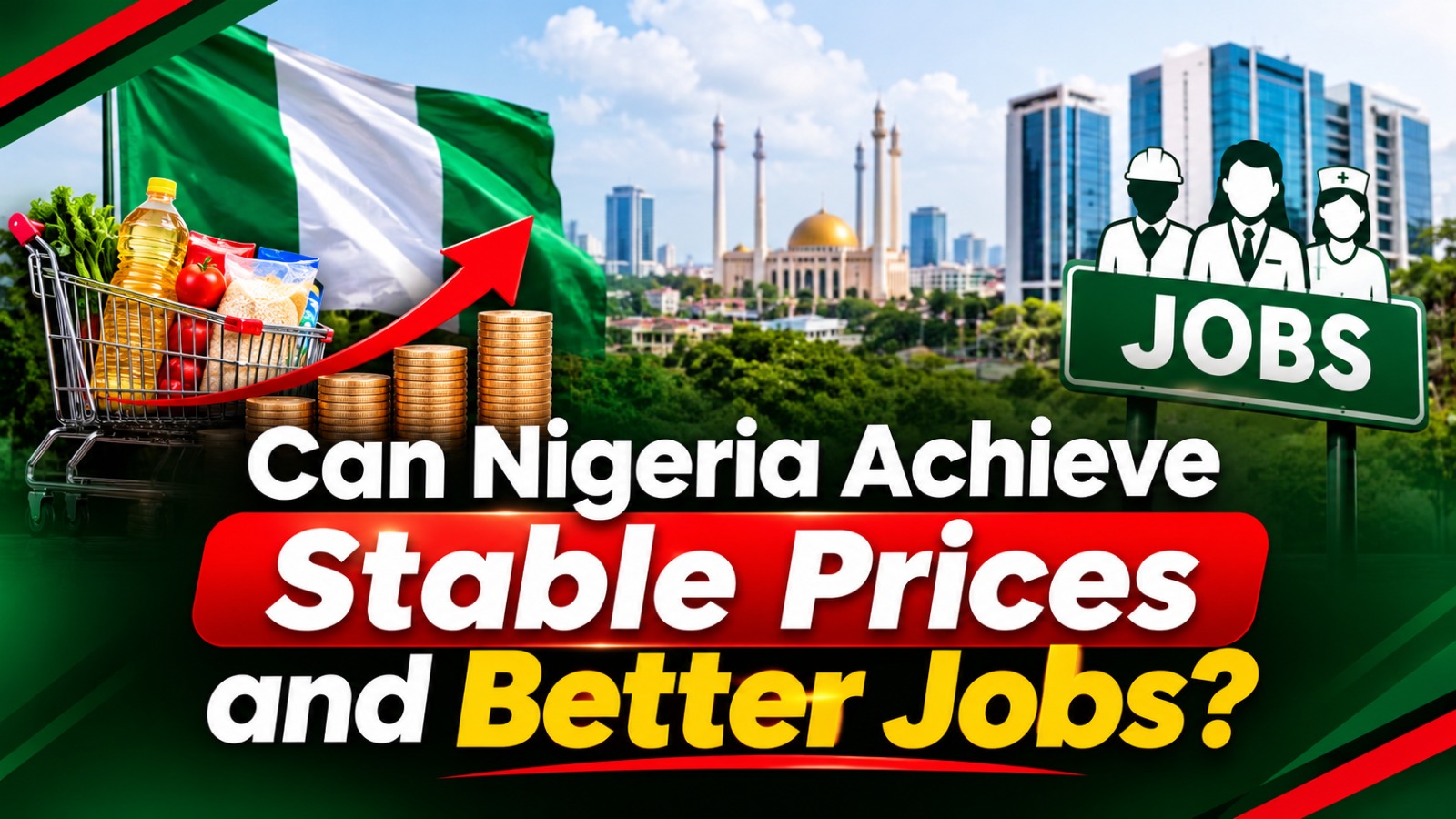
For most Nigerians, economic progress is felt through the cost of everyday necessities and the availability of decent work. Nigeria's proposed Economic Policy Framework treats price stability and employment as central benchmarks of economic performance.
Price stability, as set out in the framework, means creating an economy where the cost of goods and services does not rise quickly or unpredictably. The framework proposes **low single-digit inflation**, a predictable exchange rate and single-digit interest rates. It clarifies that lower inflation does not mean prices will return to previous levels; rather, the pace at which prices rise should slow. A steadier exchange rate could help businesses that depend on imported materials plan their costs, while lower interest rates could make borrowing cheaper. The outcome table, however, does not specify which interest-rate benchmark is meant.
The fourth outcome goes beyond simply counting employed people. It calls for net job growth, better-quality jobs and near full employment, with unemployment below 5%. Someone who works long hours for an income that cannot cover basic needs may be counted as employed without experiencing meaningful economic progress. Job quality therefore involves earnings, security, working conditions and opportunities to develop skills. The proposed National Economic Scorecard includes employment, formal jobs and youth employment as indicators, because these measures can help show whether opportunities are expanding and who is benefiting.
The targets will carry little weight without reliable information showing whether inflation is easing sustainably, exchange-rate conditions are becoming more predictable and employment opportunities are improving. It will also be important to examine how these changes affect low-income households and small businesses.
Price stability can help households plan their spending, while productive employment provides the income people need to improve their lives. Neither outcome should be judged by statistics alone. A stronger economy should make prices more predictable and make decent work and sustainable incomes more accessible to Nigerians.