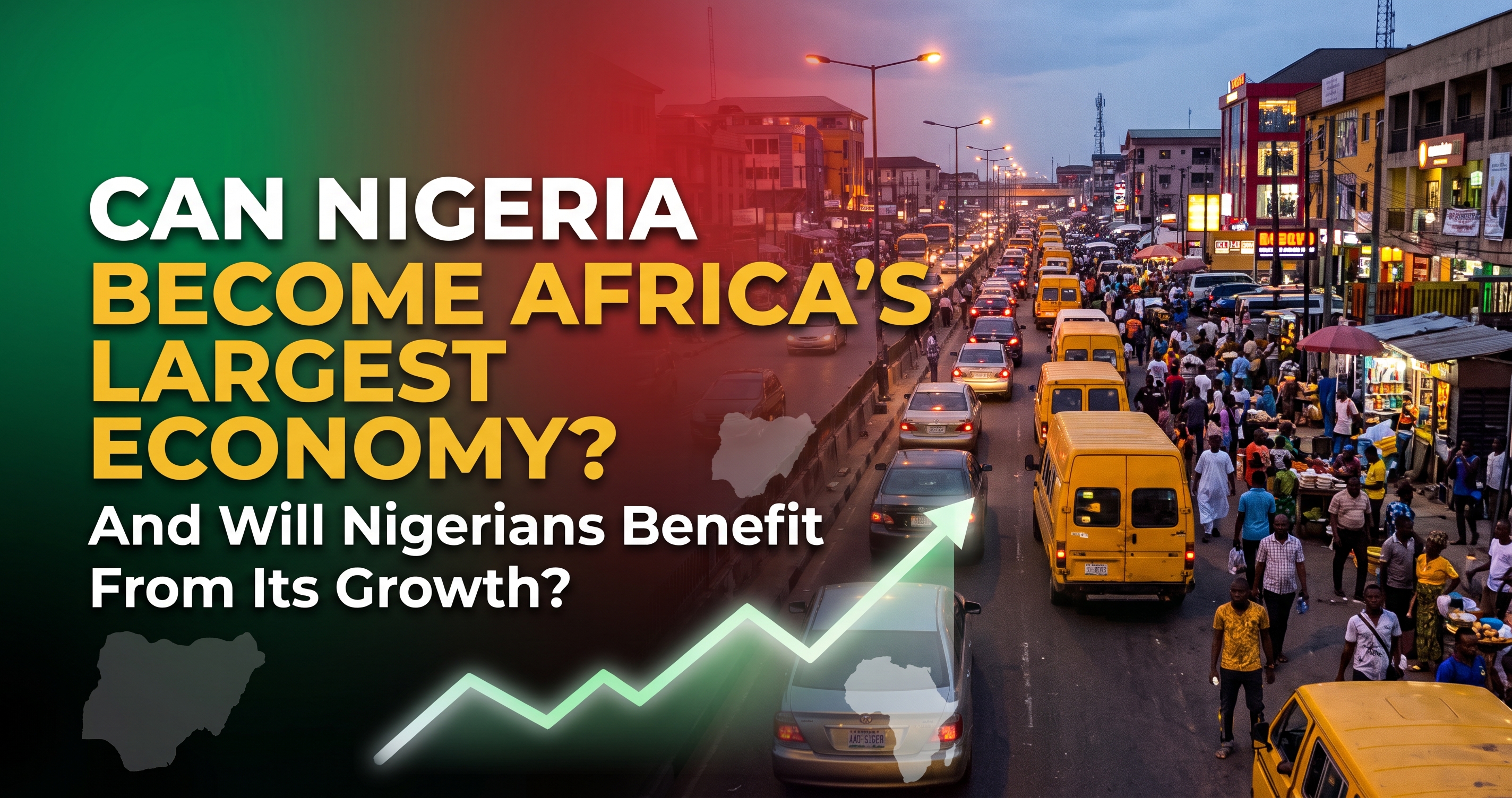
Nigeria's proposed Economic Policy Framework has laid out an ambitious agenda: position the country as Africa's largest economy, secure a place among the world's 20 biggest economies, and maintain economic growth that outpaces population growth. A bigger economy, however, does not automatically mean better living conditions. The real challenge is ensuring that economic expansion translates into higher incomes and more opportunities for Nigerians.
The first outcome centres on economic size, which is generally measured through Gross Domestic Product (GDP), the total value of goods and services produced in the economy. A larger economy can reflect more production, investment and commercial activity, but GDP rankings do not tell the whole story. A country can have a large economy while many people still face low incomes, unemployment and poverty. For Nigerians, the more important question is not only how large the economy becomes, but whether that growth improves household earnings and creates opportunities across different sectors.
The second outcome proposes that GDP should consistently grow faster than the population. Consider an economy growing by 3% while its population grows by 4%. The economy is expanding, yet output per person may fall. When economic growth consistently exceeds population growth, it creates better conditions for improving average incomes and living standards. Even so, this does not guarantee that everyone benefits equally, as the gains must reach households and extend beyond a few sectors.
The proposed National Economic Scorecard includes real GDP, GDP per capita and real household disposable income. These indicators look beyond the headline size of the economy and help show whether growth is translating into greater economic resources for people.
The framework presents these outcomes as enduring standards of performance rather than targets for a particular period. It does not attach a specific deadline to becoming Africa's largest economy or to achieving growth above population growth.
Becoming Africa's largest economy and achieving sustained growth would be significant milestones. Their real value, however, should be measured by whether Nigerians experience better incomes, more employment opportunities and improved living standards. The question is not simply how big Nigeria's economy can become, but how many Nigerians will benefit from its growth.