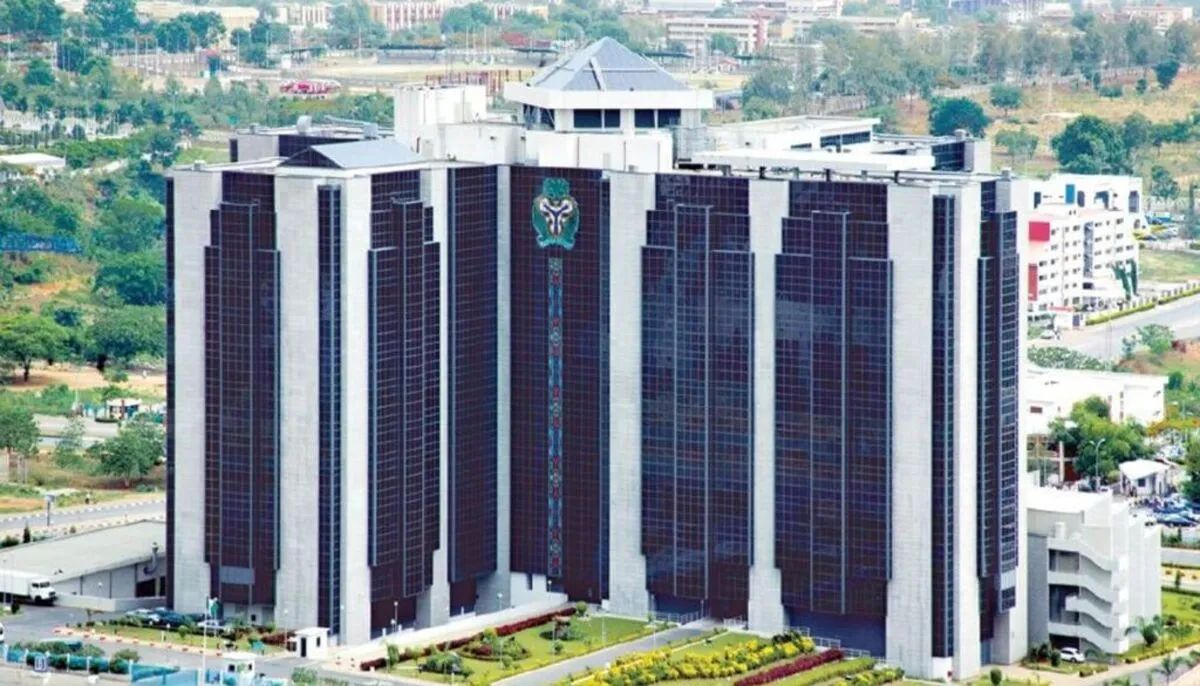
The Central Bank of Nigeria will offer N800 billion in Nigerian Treasury Bills on Wednesday, 28 October 2026, acting on behalf of the Debt Management Office, as banks' placements at the CBN's Standing Deposit Facility reached N6.98 trillion on Tuesday, 27 October.
According to the CBN's invitation to tender and liquidity data from the Financial Markets Dealers Association, the financial system is projected to receive N2.813 trillion in inflows this week. The auction follows Tuesday's settlement of N2.132 trillion in Open Market Operation maturities and N53.493 billion in primary market maturities, which has left the system flush with liquidity and may support demand for government securities.
The N800 billion offer is divided into three tenors: N100 billion in 91-day bills, N100 billion in 182-day bills, and N600 billion in 364-day bills, equal to 12.5%, 12.5%, and 75% of the total. The securities will be issued through a Dutch auction.
Expected inflows are led by OMO maturities of N2.408 trillion, approximately 85.6% of the projected N2.813 trillion. Federal Government bond coupon payments are expected to contribute N263.58 billion, Treasury Bills maturities N130.72 billion, and corporate bond coupon payments N10.92 billion. The projected weekly inflow is slightly below the N2.858 trillion recorded in the previous week, mainly because no Federation Account Allocation Committee distribution is scheduled this week compared with N2.43 trillion previously. OMO maturities are N341 billion higher than the N2.067 trillion recorded the prior week. System liquidity increased 10.39% week-on-week to N6.936 trillion in the week ended 23 October.
The auction coincides with N130.72 billion in maturing Treasury Bills, with settlement scheduled for 29 October. The advertised N800 billion offer exceeds that maturity by about N669.28 billion, meaning a full allotment would absorb roughly N669.28 billion more than the funds released through Treasury Bills maturity alone. Banks' SDF placements of N6.98 trillion as of 27 October indicate substantial funds deposited with the CBN ahead of the auction, while the CBN's OMO operations could also mop up part of the returning liquidity. The actual impact on banking-system liquidity will depend on investor subscriptions, final allotments, and the extent to which investors reinvest proceeds from maturing instruments.
Demand for one-year Treasury Bills has stayed strong in recent auctions even as stop rates have declined. At the 7 October auction, the DMO allotted N968.47 billion against an advertised offer of N900 billion, and the 364-day stop rate fell to 15.85%, with investors submitting N1.683 trillion in bids for the one-year bill. At the 14 October auction, the DMO rejected about 74% of N1.032 trillion in total subscriptions, accepting only N269.06 billion, while the one-year rate rose to 15.90% for the first time since August. Strong demand could give the DMO room to lower stop rates further, while additional liquidity withdrawals or higher investor yield expectations could limit downward pressure on rates.