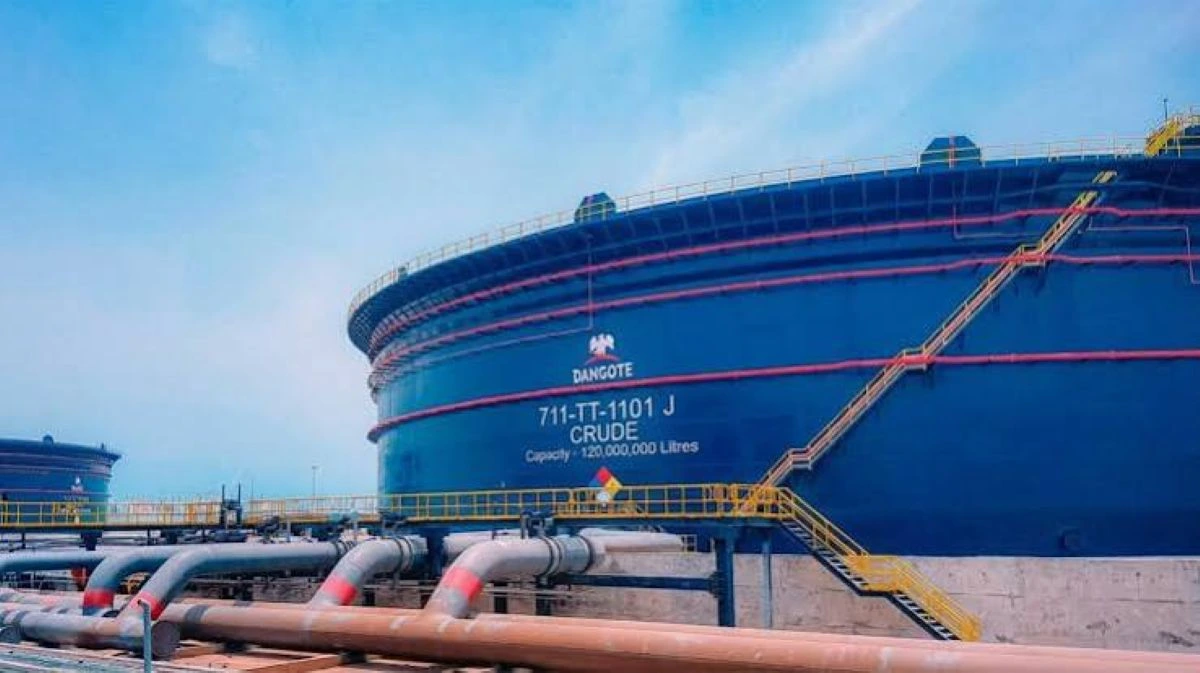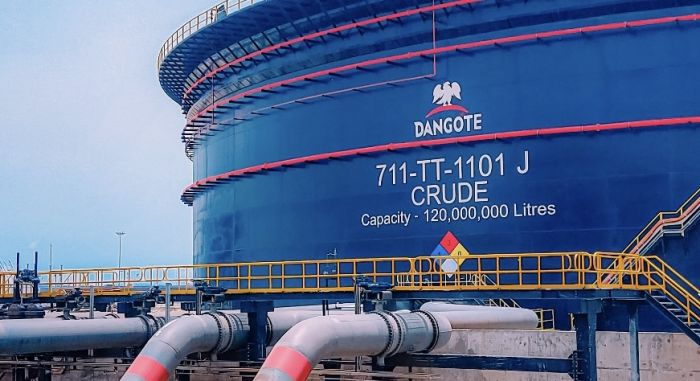
Dangote Petroleum Refinery has firmly rejected allegations that refined petroleum products exported from its facility are being re-imported into Nigeria through the ship-to-ship trading hub in Lomé, Togo, describing the claim as a "web of falsehoods" unsupported by trade data or commercial reasoning.
The company issued a statement on Tuesday, June 23, responding to remarks attributed to Matthew Tracey-Cook of S&P Global Commodity Insights during a webinar organised by the Major Energy Marketers Association of Nigeria (MEMAN) last week. Tracey-Cook was quoted as saying that Dangote volumes shipped on a coastal basis were arriving back in Lagos from Lomé, and that between March and May, over 70–80% of imported volumes into Nigeria had originated from Dangote's coastal exports.
Dangote countered with four arguments. First, it said facilitating re-importation would run counter to its objective of strengthening its position as a leading supplier to the Nigerian market. Second, it cited the economics: logistics costs of moving products from the refinery to Lomé and back into Nigeria are estimated at **US$82–90 per metric ton**, a cost that would significantly erode margins and eliminate any commercial incentive. Third, the refinery noted it does not offer export discounts large enough to create a viable arbitrage opportunity between export and domestic markets. Fourth, it pointed to its compliance procedures, stating it maintains comprehensive records of all product sales, including lifting locations, nominated vessels, counterparties, and destination declarations.
"Any suggestion that the refinery is knowingly facilitating re-importation is inconsistent with the contractual restrictions imposed on buyers and the refinery's established compliance procedures," the statement added.
Dangote further noted that it has consistently advocated for reducing Nigeria's dependence on imported petroleum products, warning that increased imports undermine local refining, pressure foreign exchange reserves, and weaken domestic industrial development.
The controversy comes as data from the Nigerian Midstream and Downstream Petroleum Regulatory Authority (NMDPRA) showed that average daily imports of Premium Motor Spirit (PMS) jumped **59.5% to 5.9 million litres per day in May**, up from 3.7 million litres per day in April. However, domestic refineries contributed **41.5 million litres per day** during the same period, meaning locally refined products accounted for nearly 88% of total petrol supplied across the country in May.