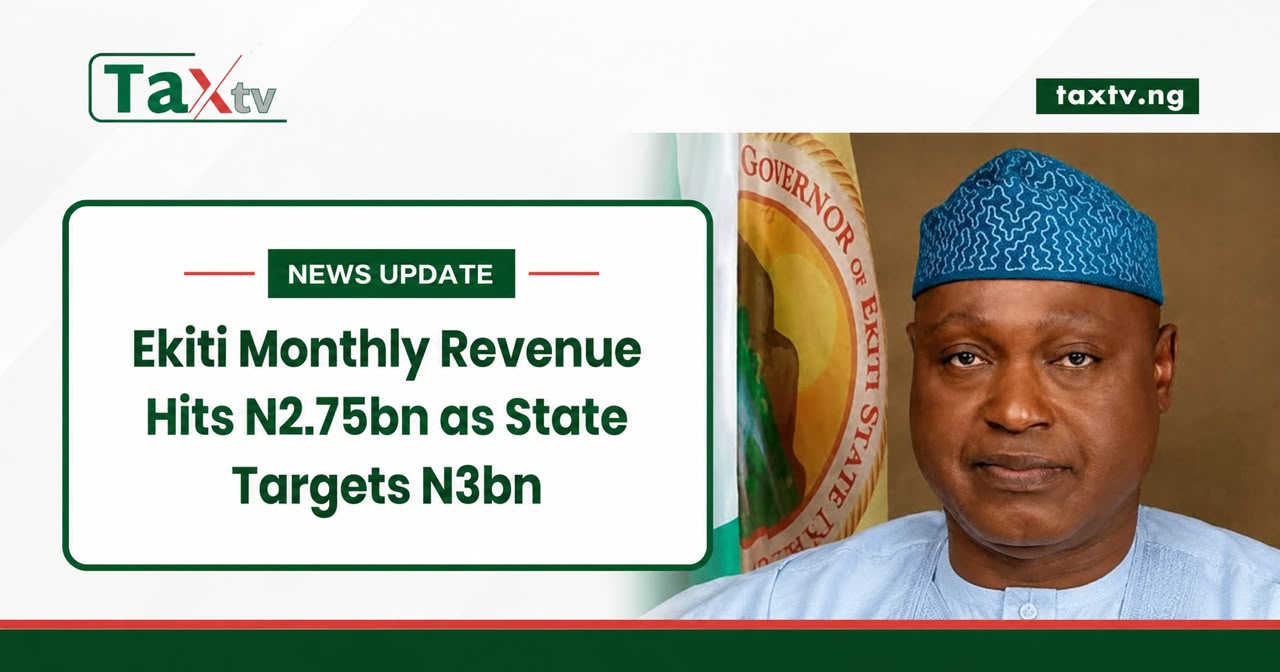
Ekiti State is steadily approaching its ₦3 billion monthly internally generated revenue target, with collections now standing at ₦2.75 billion, according to the Ekiti State Internal Revenue Service.
Olaniran Olatona, Chairman of EKIRS, said the improvement reflects broader progress in tax compliance, the deployment of digital tools for revenue administration, and deliberate efforts to widen the state's tax base.
He explained that simplifying tax payment processes for individuals and businesses has encouraged more voluntary compliance, while technology-driven systems have helped the state identify and capture new revenue streams that were previously untapped.
The upward trajectory in IGR signals Ekiti's determination to reduce reliance on federal allocations and build a more self-sustaining fiscal profile. A stronger internally generated revenue base provides the state government with greater flexibility to fund infrastructure, education, healthcare, and other developmental priorities without waiting on statutory disbursements from Abuja.
With the gap to the ₦3 billion monthly benchmark now narrowing to ₦250 million, the state government has indicated that it will sustain ongoing reforms in tax administration and intensify taxpayer engagement. The objective, officials say, is to lock in the current momentum and create a durable revenue framework capable of supporting long-term economic growth.
The progress recorded by Ekiti mirrors a wider shift among Nigeria's subnational governments, many of which are investing in revenue modernisation to cushion the volatility of federally distributed oil revenues.