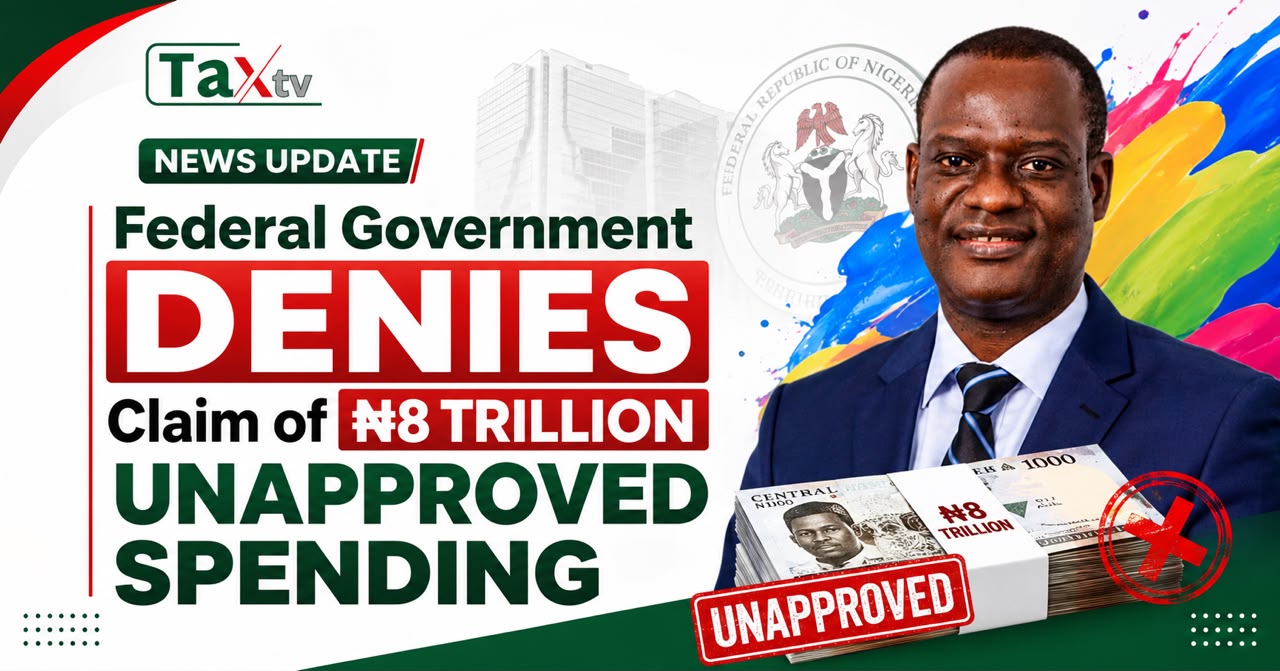
The Federal Government has pushed back against allegations that it spent N8 trillion without the requisite legislative approval, dismissing the claim as baseless.
The denial comes amid heightened public scrutiny of government fiscal operations and transparency in the management of public funds. While specifics of the allegation—including its source and the period under review—were not immediately detailed in the initial report, the government’s response signals its intent to counter narratives suggesting fiscal indiscipline within its ranks.
Nigeria’s budgetary framework requires that all public expenditure receive appropriation by the National Assembly, in line with constitutional provisions and the Fiscal Responsibility Act. Any expenditure outside approved budgetary allocations is considered a breach of financial regulations and could attract sanction.
Observers note that tensions between the executive and legislative arms over spending controls are not uncommon, particularly where supplementary budgets, contingency funds, or extra-budgetary interventions are concerned. The N8 trillion figure cited in the allegation represents a significant sum—equivalent to a substantial portion of Nigeria’s annual federal budget—and would, if proven, constitute one of the largest fiscal irregularities in the country’s recent history.
The government has not yet issued a formal statement providing a line-by-line rebuttal of the alleged N8 trillion spending. However, the swift denial indicates the sensitivity of the matter and the potential political and reputational consequences of allowing such claims to go unchallenged.
Further developments are expected as the story unfolds and additional details emerge regarding the origin and substance of the allegation.