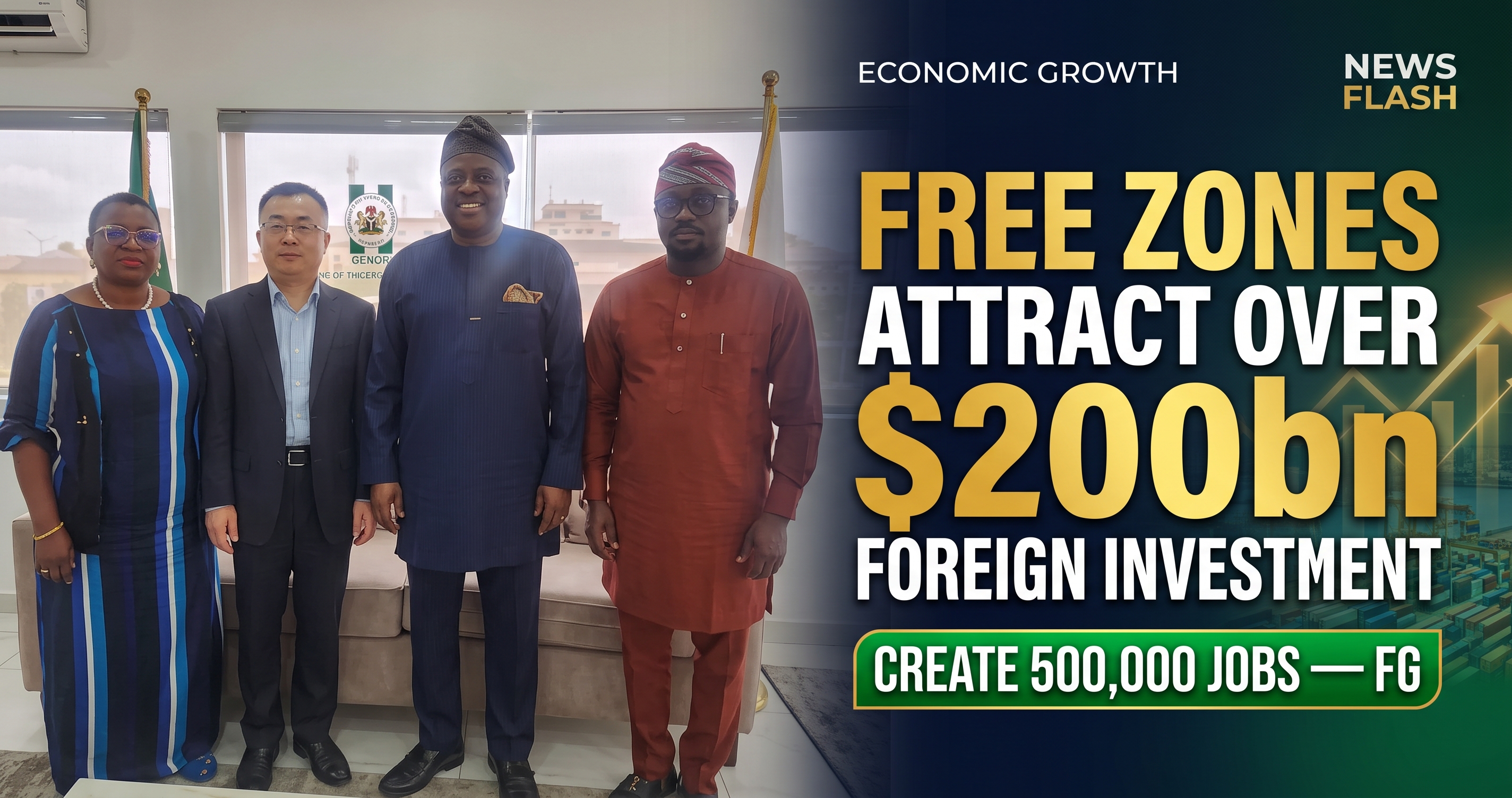
Nigeria's free trade zones have drawn more than $200bn in foreign investment and over ₦900bn in domestic investment, the Federal Government has disclosed, as it moves to modernise the regulations governing the country's free-zone system.
Minister of Industry, Trade and Investment Jumoke Oduwole presented the figures during a meeting of Special Economic Zones stakeholders. According to Oduwole, the zones have generated more than 100,000 direct jobs, while total employment exceeds 500,000 once positions across supply chains, logistics networks and host communities are included.
The Federal Government is reviewing the Nigeria Export Processing Zones Authority (NEPZA) regulations to reflect changes in business and investment models. The proposed framework will formally recognise Digital Free Zones and Digital Special Economic Zones, allowing some technology-driven businesses to operate without conventional physical-zone requirements.
The reforms will also clarify the roles of NEPZA, the Oil and Gas Free Zones Authority, the Nigeria Revenue Service and the Nigeria Customs Service. The government further intends to reinforce the 75% export and 25% domestic-sales structure and ensure that domestic sales comply with applicable Nigerian tax laws.
According to the government, the reforms are designed to strengthen fiscal accountability while preserving the incentives that make the zones attractive to investors and increasing their contribution to non-oil exports.