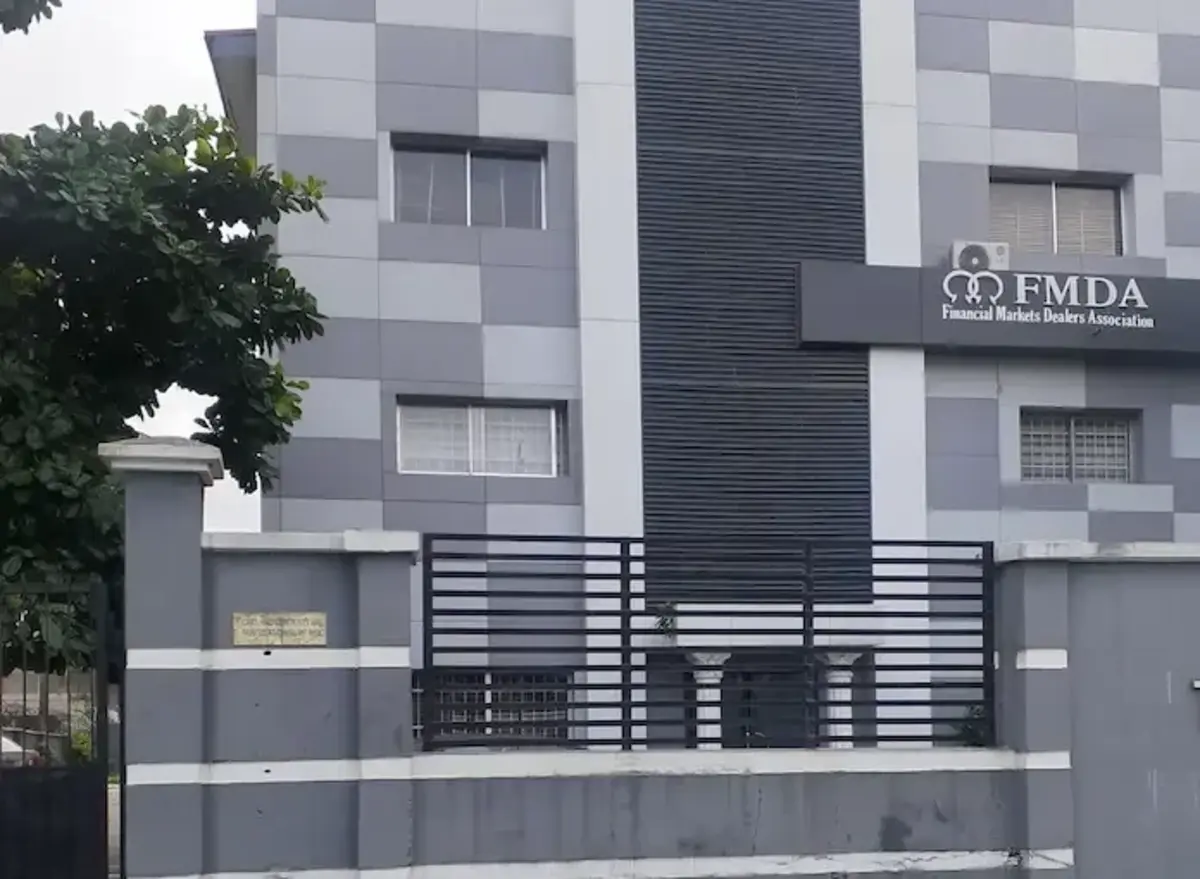
Nigeria's financial system is projected to receive roughly N13.79 trillion in liquidity inflows in November 2026, according to the Financial Markets Dealers Association's October 2026 market report. The inflows are driven mainly by Open Market Operations (OMO) maturities and government disbursements, and represent a 2.16% increase from the N13.50 trillion recorded in October. For that month, the association had earlier projected inflows of N13.25 trillion.
Total inflows are placed at N13.787 trillion for November, compared with N13.495 trillion in October, an increase of about N292 billion. OMO maturities are expected to supply the largest component at N8.927 trillion, or approximately 64.75% of the total. Federation Account Allocation Committee (FAAC) allocations are estimated at N2.50 trillion, representing 18.13%, while Treasury Bills maturities are projected at N1.919 trillion, or 13.92%. Federal Government bond coupon payments are put at N323.154 billion, corporate bond coupons at N68.032 billion and commercial paper maturities at N50.016 billion. Together, OMO maturities, FAAC allocations and Treasury Bills repayments account for around 96.8% of expected inflows. Treasury Bills maturities are expected to post the largest monthly increase, rising 46.49%, or about N609 billion, from N1.310 trillion in October. OMO maturities are projected to decline by 1.37%, while Federal Government bond coupon payments may fall by 49.08%. Corporate bond coupon payments are forecast to rise by 213.28%, though their overall contribution remains small. A $105.94 million Eurobond coupon payment due in November is excluded from the naira projection.
The November forecast follows a slowdown in the Central Bank of Nigeria's liquidity absorption operations. Banking-system liquidity increased by 56.75% to N7.373 trillion in October from N4.703 trillion in September. The FMDA noted that the CBN allotted N6.182 trillion in fresh OMO securities against N9.051 trillion in maturities, leaving a net repayment of about N2.87 trillion before other liquidity movements. In September, the CBN sold approximately N17.51 trillion in OMO securities against N10.89 trillion in maturities, resulting in a net withdrawal of about N6.62 trillion. The shift became clearer towards the end of October, when the CBN reduced allotments at its final OMO auction and Treasury Bills auctions recorded substantial unfilled subscriptions. Banking-system liquidity had risen by 69.39% to N6.283 trillion in the week ended October 16. November's projected inflows also exceed the N10.53 trillion forecast in the association's May report by approximately 31%.
Despite the higher liquidity, interbank funding rates remained stable in October. The Nigeria Overnight Financing Rate closed unchanged at 20.00%, while the overnight rate declined by five basis points to 20.38%. The Monetary Policy Rate stayed at 23.00% after the CBN's September 2026 decision to reduce it by 350 basis points. The FMDA expects relatively comfortable liquidity conditions if the CBN maintains the selective auction allotments recorded late in October, but cautioned banks to keep adequate buffers given the CBN's continued reliance on OMO auctions. It also noted that the projected N13.79 trillion does not automatically translate into an equivalent rise in banking-system liquidity, as the final outcome will depend on fresh securities issuance, government cash movements and the reinvestment of maturing obligations.