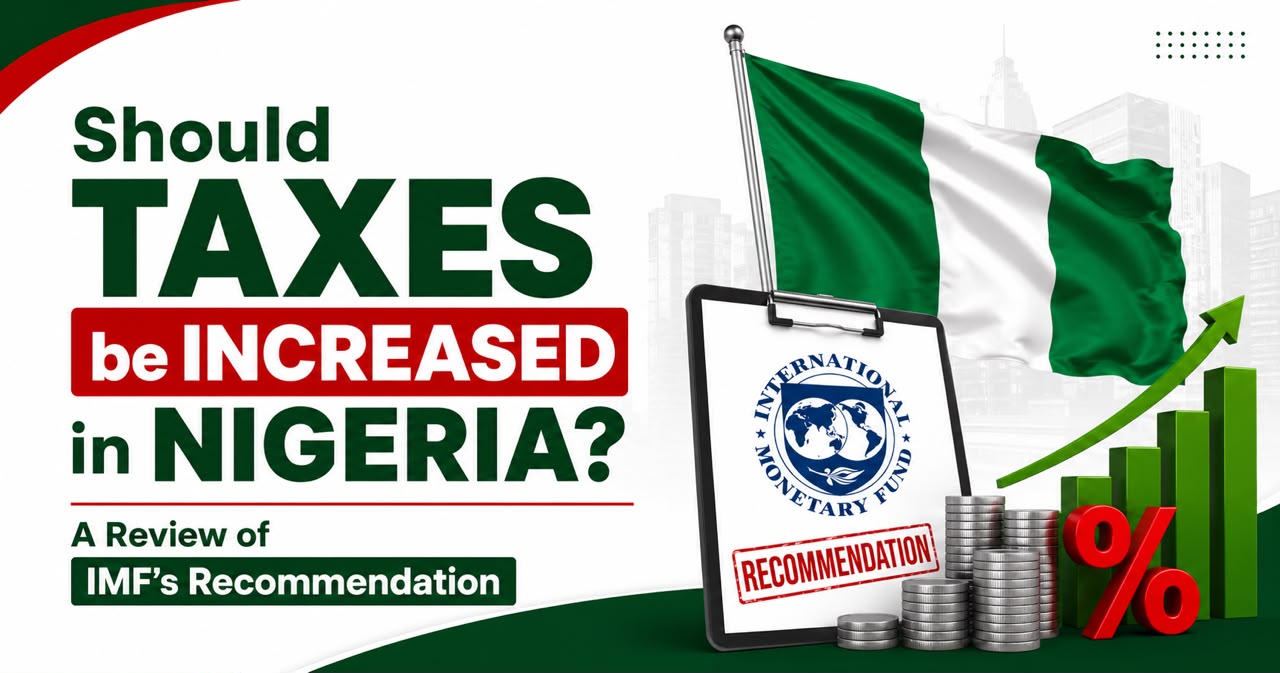
The International Monetary Fund has again urged Nigeria to strengthen revenue mobilisation, arguing in its latest Article IV consultation report that further fiscal measures are needed to sustain national development and contain a widening deficit.
The Fund acknowledged that recent administrative reforms are producing results, but maintained that additional policy adjustments are required to bridge the gap between a projected expenditure budget of ₦68.32 trillion and estimated revenues of ₦36.87 trillion. Specifically, it recommended raising the standard Value Added Tax rate, extending VAT to fuel products, streamlining exemptions in the extractive industries, and introducing dedicated excises for telecommunications.
On paper, these proposals amount to a macro-fiscal blueprint. However, they appear to overlook the operational realities of Nigeria's newly deployed tax framework. The recently gazetted Nigeria Tax Act 2025 has already captured the very sectors the Fund wants to target.
Through the Surcharge on Fossil Fuels under Section 159 of the NTA 2025, the government has embedded a consumption-targeted levy of 5% directly on the retail price of conventional fuel products at the pump. Likewise, Chapter Seven of the legislation already codifies a standard rate surcharge of 5% on telecommunications services, covering electronic communications, data, and voice calls. Layering additional VAT or excise duties on top of these operational sector surcharges would expose households and businesses to double taxation on essential utilities.
Available figures also suggest that Nigeria's existing tax modernisation efforts are working without the need for higher rates. Domestic VAT collections climbed to ₦2.42 trillion in the first quarter of 2026, a 17.06% year-on-year increase from the ₦2.07 trillion recorded in the corresponding period of 2025. This organic growth indicates that automated instruments such as the Electronic Fiscal System, mandated under Section 23 of the Nigeria Tax Administration Act 2025, are closing revenue leakages and widening the tax net through administrative compliance.
The IMF's proposals also sit uneasily with the social conditions highlighted in its own report. The Fund observed that, despite reforms, conditions for many Nigerians remain difficult: poverty reached 63 per cent on the national poverty line, and an estimated 27 million Nigerians faced food insecurity in the fall of 2025.