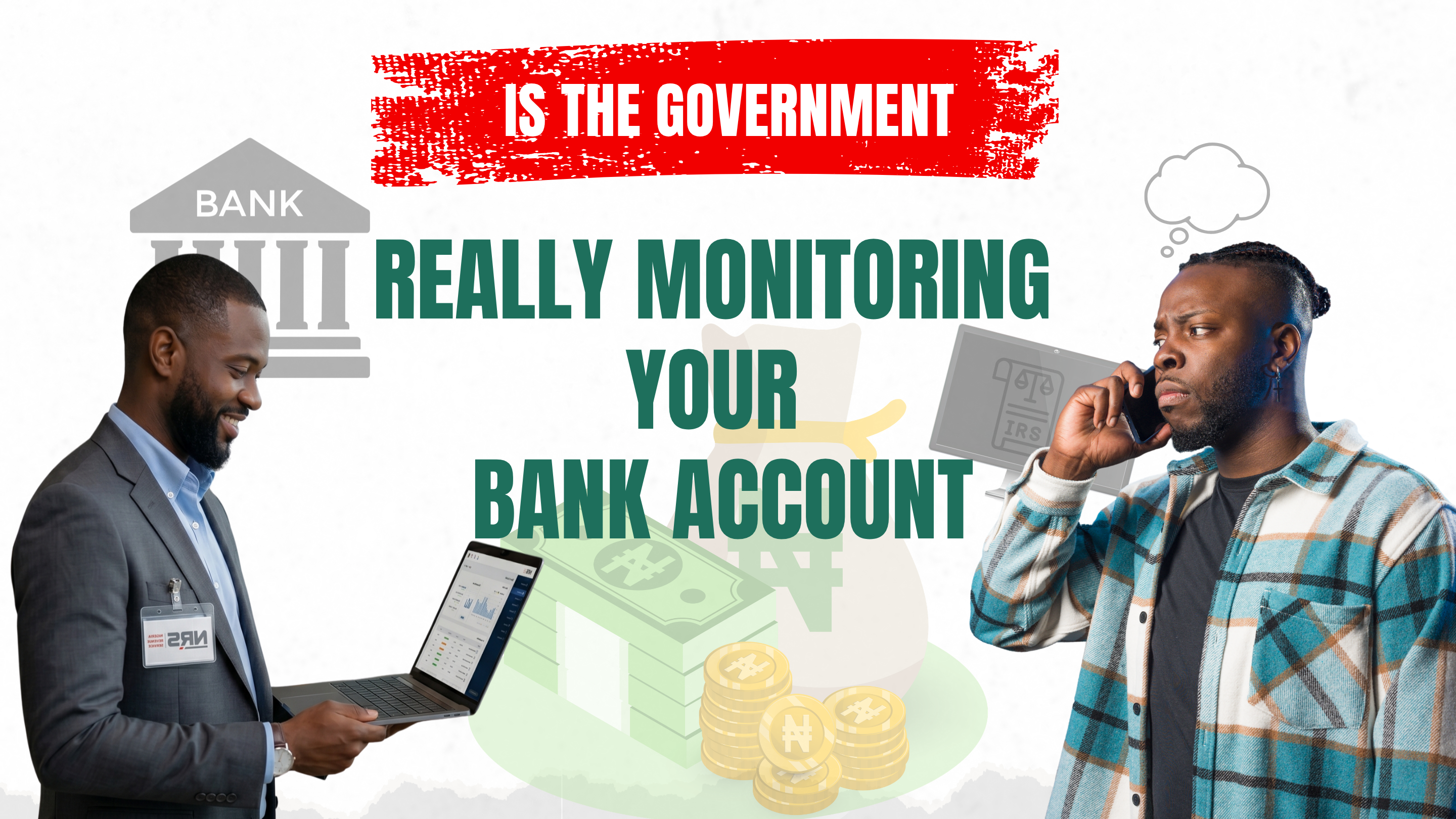
Widespread anxiety over government surveillance of personal bank accounts has deepened in recent months, fuelled by a mix of social media rumours, half-understood legal provisions, and genuine policy shifts. For many Nigerians, the question is no longer hypothetical: is the Federal Inland Revenue Service, or any other government agency, actively peering into individual bank ledgers?
The short answer is more nuanced than viral messages suggest. Yes, Nigerian tax authorities possess legal powers to access certain bank records. No, there is no blanket, real-time monitoring of every citizen's account balance, transaction log, or private spending.
What changed most significantly was the Finance Act 2019, which amended the Federal Inland Revenue Service (Establishment) Act. Section 28 of that Act now empowers FIRS to appoint any person, including a bank, as an agent for the collection of tax from a defaulting taxpayer. This means a bank can be directed to freeze or remit funds from a customer's account where an outstanding, uncontested tax liability exists. It is a targeted enforcement tool, not a dragnet.
Further amendments in the Finance Act 2021 clarified FIRS's authority to demand and obtain electronic records, including bank statements, during audits or investigations of specific taxpayers. Again, the trigger is an existing tax enquiry, not routine mass surveillance.
The notion that the government has deployed technology to monitor all accounts holding N50 million and above also circulates widely. This appears to conflate several separate initiatives. The Central Bank of Nigeria's banking sector supervision involves monitoring large transactions for anti-money laundering purposes under the Money Laundering (Prevention and Prohibition) Act. Separately, Nigeria's participation in the Common Reporting Standard under the Automatic Exchange of Information framework requires financial institutions to report certain account information to FIRS, which may share it with treaty partners. These efforts focus on offshore assets, cross-border tax evasion, and illicit financial flows rather than everyday domestic banking.
What the average account holder should understand is that a tax compliance net is tightening, but it is cast at specific risks: undisclosed foreign income, unexplained wealth inconsistent with filed returns, and deliberate tax default. Filing accurate returns and paying taxes due remains the most effective way to stay outside that net.
For now, the broad, indiscriminate monitoring depicted in alarmist messages does not reflect the legal and operational reality. Targeted enforcement, however, is real and expanding.