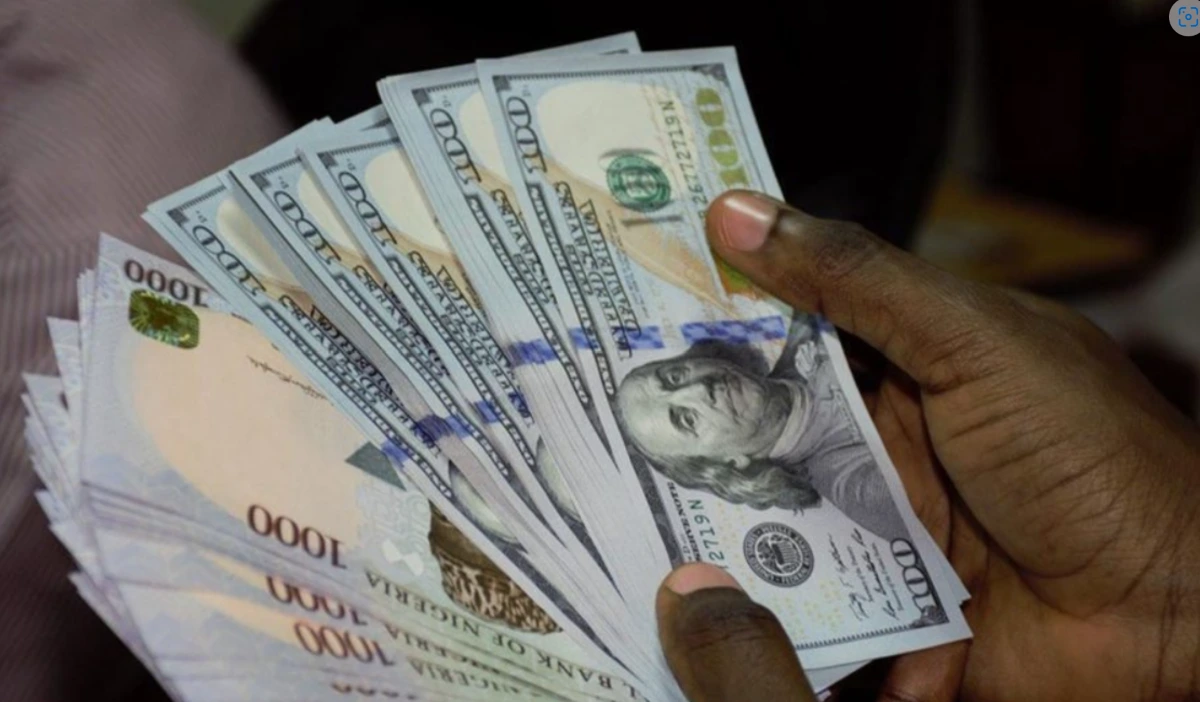
For Emeka Nwosu, a phone accessories trader in Computer Village, Ikeja, the debate over a N500 exchange rate is not abstract. He holds N4 million of inventory bought at N1,350 to the dollar, and every imported item on his counter was priced in dollars somewhere in the supply chain.
The commitment surfaced on 30 October 2026, when Professor Pat Utomi, a political economist and chieftain of the Nigeria Democratic Congress, said its 2027 candidate, Peter Obi, was targeting a strategic appreciation of the naira from N1,350 to N500 per dollar, a 63 per cent reduction. An accompanying price list projected sliced bread falling from N1,750 to N800 and a 50kg bag of rice from N55,000 to N27,500.
Segun Showunmi called the proposal a confusion of political aspiration with economic feasibility, observing that a $10 bag of cement would cost N5,000 at N500, not N2,000. No timeline or operational monetary framework was provided.
The push comes amid improving fundamentals. Reserves reached $55.26 billion on 30 October 2026, up from $45.57 billion in January, while the current-account surplus hit $7.54 billion in the second quarter. Refined petroleum imports fell 87.5 per cent to $310 million, and inflation has declined for three consecutive months to 14.63 per cent. Yet the naira still trades near N1,347.
Purchasing power parity supports the target in principle: the IMF's implied conversion rate is roughly N218 per international dollar for 2026, though such gaps partly reflect lower prices for non-traded goods.
Money-supply arithmetic is less forgiving. Broad money reached N146.60 trillion in September 2026, up 24.47 per cent year-on-year against an 8 per cent CBN target. At $55.26 billion in reserves, full dollar backing implies N2,653 to the dollar; holding N500 would require $293.20 billion, a shortfall of $237.94 billion, or 61.5 per cent of annual GDP.
Fiscal effects would be severe. The 2026 budget is benchmarked at N1,400 to the dollar; at N500, each dollar of oil revenue yields N500 instead of N1,400, a 64 per cent loss. Remittances of $21.81 billion in 2025 would lose 63 per cent of their naira value.
History reinforces the caution. The CBN held the naira near N197 for 16 months from February 2015, and reserves fell from $42.8 billion to $23.8 billion by September 2016. After unification in June 2023, the rate moved from about N472 to N753 by month-end and N912 by December.