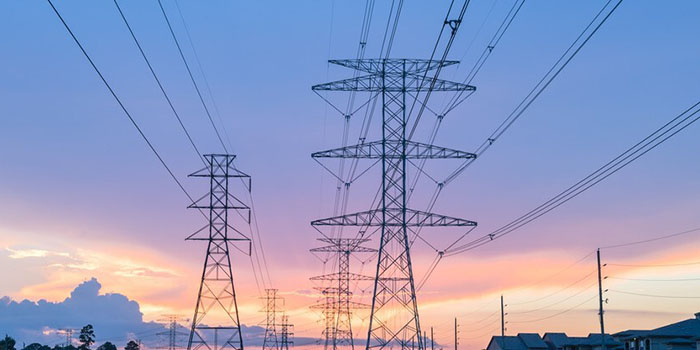
Electricity affordability across Africa continues to vary sharply, with Nigeria ranking fifth among the continent's cheapest electricity markets in the first quarter of 2026, according to data from Global Petrol Prices.
Nigeria's residential consumers pay an average of **$0.037 per kilowatt-hour (kWh)**, while commercial consumers face $0.048 per kWh. This places Nigeria below the African and global averages, though affordability does not translate into reliable supply — frequent outages and limited grid coverage continue to push households and businesses toward generators and solar alternatives.
The country operates a Service-Based Tariff (SBT) system that classifies customers into Bands A to E based on daily supply hours. Following the 2024 tariff adjustment, Band A customers — who receive at least 20 hours of daily power — were charged approximately **N209.50 per kWh**, while tariffs for lower bands remained largely unchanged. The reforms aimed to reduce subsidy burdens and improve distribution companies' financial viability, but the sector still grapples with generation constraints, transmission bottlenecks, and distribution losses.
Topping the ranking is **Ethiopia**, where residential consumers pay just **$0.006 per kWh** and businesses pay $0.014 per kWh. The country's ultra-low tariffs are driven by vast hydropower resources and investments in generation infrastructure, including the Grand Ethiopian Renaissance Dam (GERD). Ethiopia's electricity surplus has also strengthened its position as a regional power exporter — Kenya imported a record 1,274.42 GWh from Ethiopia in the fiscal year ended June 2025.
**Egypt** ranks second at $0.021 per kWh residential, benefiting from large-scale investments in natural gas-fired plants and renewable energy that transformed the country from chronic power shortages to surplus generation capacity. **Zambia** ($0.024/kWh) and **Angola** ($0.030/kWh) follow, with Angola notable as one of the few African markets where commercial tariffs ($0.025/kWh) are lower than residential rates — a structure designed to support industrial activity and economic diversification.
Other countries in the top 10 include **Algeria** ($0.042/kWh residential, with commercial tariffs at $0.035/kWh), **Sudan** ($0.044/kWh), **Tunisia** ($0.068/kWh), the **Democratic Republic of the Congo** ($0.072/kWh), and **Cameroon** ($0.088/kWh). Many of these markets rely on government subsidies, hydropower, or state-controlled pricing mechanisms to keep tariffs low.