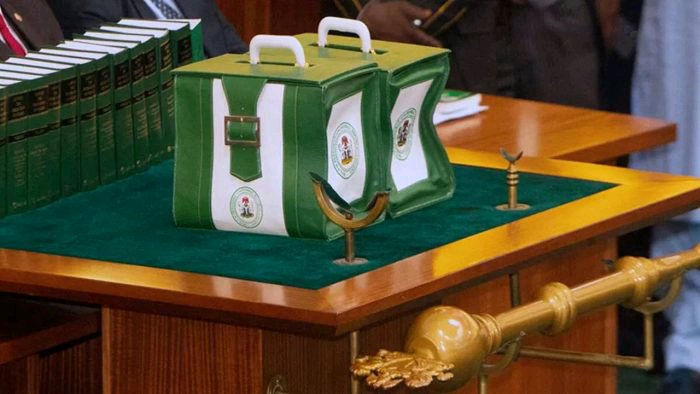
In 2016, Hon. Abdulmumin Jibrin, then Chairman of the House Committee on Appropriation, triggered a political firestorm by publicly accusing Speaker Yakubu Dogara and other principal officers of inserting projects worth over N30 billion into the 2016 Appropriation Act through irregular channels.
Jibrin claimed he faced pressure to accommodate personal and constituency projects outside the established legislative process. The fallout led to his suspension for 180 legislative days and ignited a national conversation about transparency deficits in Nigeria's budgeting framework.
A decade later, the country confronts an even more troubling scandal. Prince Adeniyi Adeyemi stands accused of fabricating an entire government entity—the Presidential Foreign Intervention Promotion Council—forging official documents, securing office space within the Federal Secretariat, and obtaining a N1.3 billion allocation in the 2026 national budget. The Presidency has since disowned the agency as entirely fictitious, and the matter has been referred to the Economic and Financial Crimes Commission.
The 2026 case represents a more serious institutional breach. Unlike the 2016 episode, which largely remained a legislative dispute, this scandal extends to document forgery, the opening of multiple bank accounts in the name of a non-existent agency, and the exploitation of official government premises. It demonstrates that the budget process is vulnerable not only to insider manipulation but also to external actors with sufficient audacity.
Both scandals point to the same systemic deficiencies. First, the verification of new agencies remains critically weak. A body should be established by law or executive instrument before receiving a budget code and allocation, yet this process was evidently bypassed. Second, documentation and authentication systems are inadequate—forged papers and bank accounts went undetected across multiple institutions. Third, oversight is fragmented and porous. The Budget Office, the Ministry of Finance, and the National Assembly all failed to identify that a non-existent agency had been earmarked for over a billion naira.
The fiscal consequences extend beyond the immediate loss. Nigeria has been running persistent budget deficits and depends heavily on borrowing to finance expenditure. Every naira misallocated or diverted widens the deficit, ultimately forcing the government to incur additional debt. The N1.3 billion channelled to the fake agency could have reduced borrowing requirements or funded tangible infrastructure projects.
Equally damaging is the erosion of public and international confidence. Domestically, many Nigerians increasingly view the national budget not as a development instrument but as a vehicle for patronage and personal enrichment. Internationally, such scandals reinforce perceptions of institutional weakness and corruption, weakening Nigeria's standing when seeking debt relief, investment, or diplomatic support.
The underlying pathology in both cases is the personalisation of public office. When institutions are treated as personal domains rather than rule-governed systems, due process collapses. Until Nigeria strengthens verification, documentation, and oversight mechanisms—and until public office is genuinely treated as a public trust—these scandals will recur, deepening both fiscal strain and reputational damage.