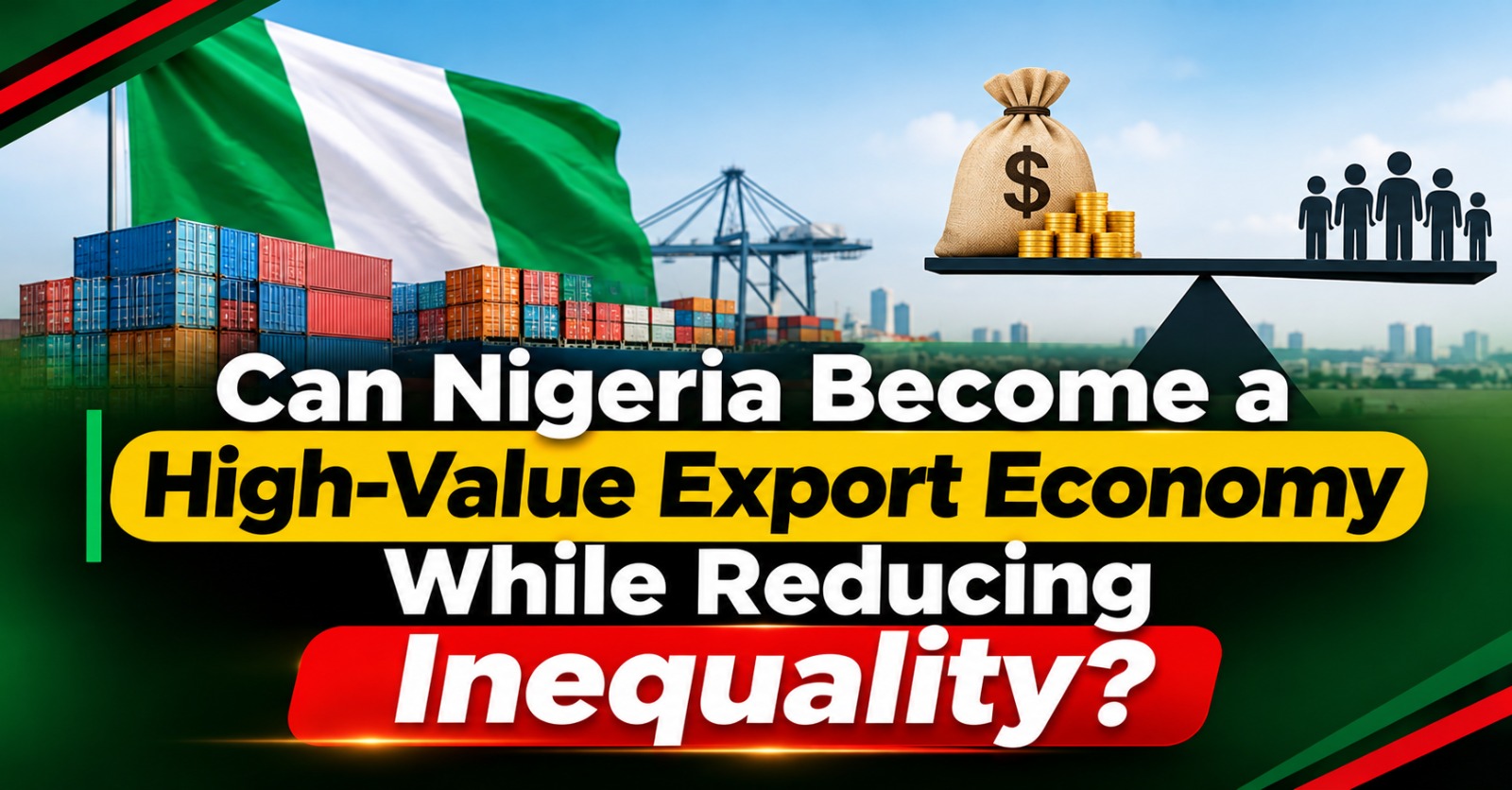
A strong economy should go beyond producing and selling greater volumes of goods. It should also build advanced capabilities, adopt technology, generate higher-value output, and ensure that a broader share of citizens benefit from economic opportunities. Nigeria's proposed Economic Policy Framework pursues these ambitions through two outcomes: economic complexity and economic inclusion.
The framework proposes that Nigeria develop advanced skills and technology and rank among the world's top 20 exporters of intellectual property, finished goods, and machinery. This target signals a shift towards producing and exporting goods and services with greater technological and knowledge content. Processing agricultural raw materials into finished products, for example, could create additional opportunities in manufacturing, logistics, and employment. Developing software, patents, and other intellectual property could also unlock new sources of value. Achieving these goals would require investment in education and technical skills, technology adoption, industrial capacity, and research and innovation.
Economic complexity alone does not guarantee that ordinary Nigerians will share in the benefits of growth, which is why the framework treats inclusion as a separate outcome. Its proposed measures include low multidimensional poverty, effective social protection, a Gini index below 0.3, and equal opportunity for women, young people, and persons with disabilities. Multidimensional poverty extends beyond income to capture deprivation in areas such as education, healthcare, and basic living conditions. Inclusion therefore involves widening access to opportunity and ensuring that vulnerable households are not left without support.
The proposed National Economic Scorecard lists non-oil exports, technology and intellectual property, and the sophistication of manufacturing and services among the indicators used to track economic complexity. For inclusion, it identifies poverty and income distribution. These indicators can help show whether progress is reaching more people and whether Nigeria is moving towards producing more sophisticated goods and services.
Nigeria's ambition to become a more technologically advanced economy is significant. However, developing sophisticated industries must proceed alongside efforts to reduce poverty and broaden access to opportunity. A successful economy should not only produce more valuable output; it should also create more opportunities for the people whose contribution makes that progress possible.