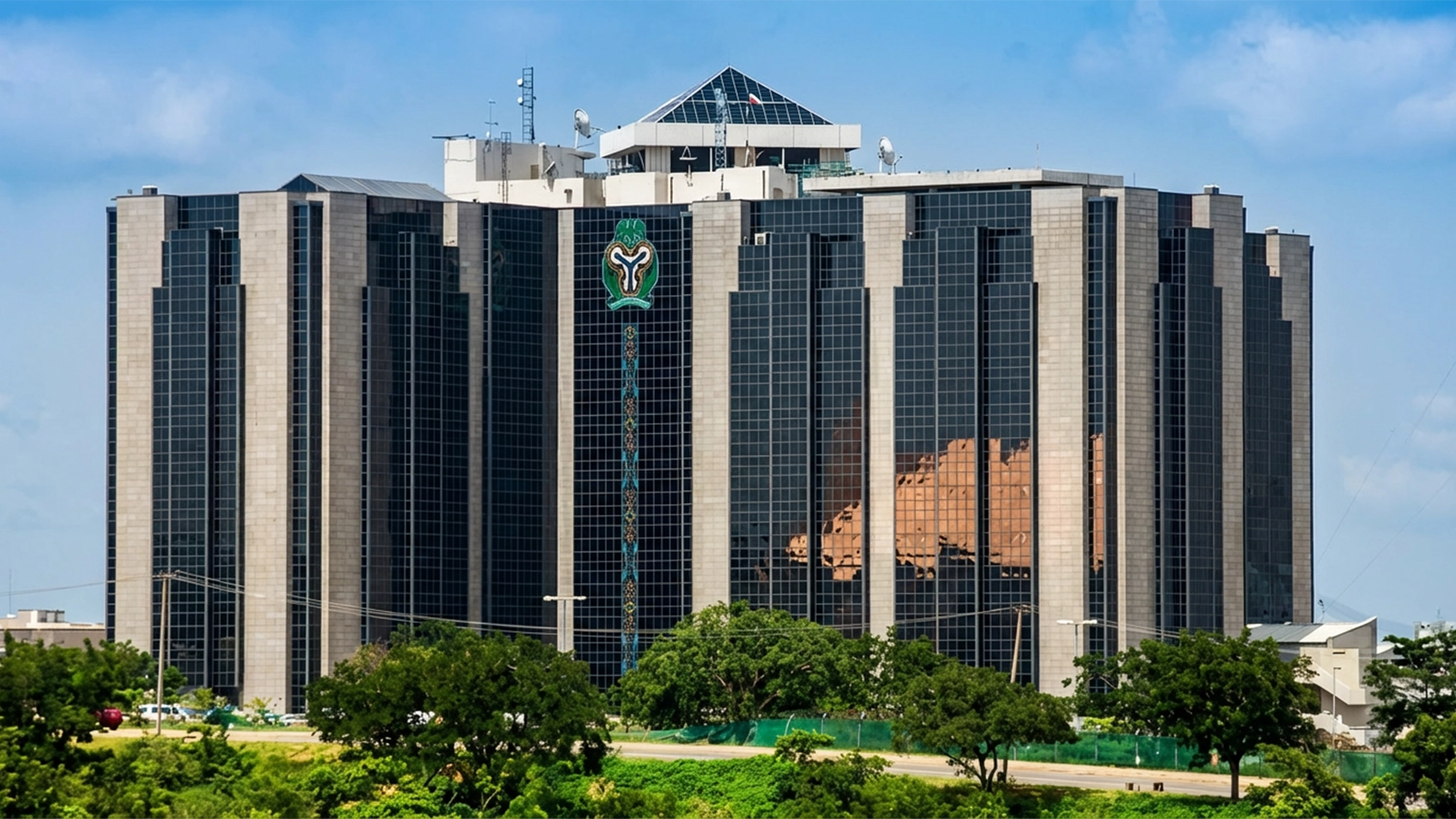
Nigeria's foreign exchange supply rose 20.5 per cent to $8.94 billion in 2025, up from $7.43 billion recorded in 2024, according to the Central Bank of Nigeria's 2025 Statistical Bulletin.
The year-on-year increase of about $1.51 billion reflected stronger monthly inflows at several points during the year, although annual supply remained well below levels seen in earlier years of the CBN's historical series. The apex bank had not yet published a sectoral breakdown of the sources of foreign exchange supplied during the year, making it difficult to determine how much each source contributed to the rise.
Monthly data showed supply was relatively weak at the start of 2025 before strengthening in the second quarter. Supply stood at $590.64 million in January and $607.63 million in February, then climbed to $1.04 billion in March and $1.65 billion in April. It moderated to $838.93 million in May and $676.31 million in June, before rising to $759.02 million in July. Supply was $677.84 million in August and fell further to $399.80 million in September. October recorded the lowest monthly figure of the year at $150.10 million, before inflows recovered to $638.38 million in November and $910.73 million in December.
The rise in supply came alongside much larger foreign exchange utilisation during the year. FX utilisation rose to $50.93 billion in 2025, the highest annual level since 2019. The gap between the broader utilisation figure and the supply series reflects the different measures captured in CBN datasets and the scale of activity across Nigeria's foreign exchange market.
Total FX inflows into Nigeria reached $109.86 billion in 2025, up 13.81 per cent from $96.53 billion in 2024. Aggregate FX outflows increased by 27.83 per cent to $49.05 billion from $38.37 billion, leaving a net FX inflow of $60.81 billion, compared with $58.16 billion in 2024.
Foreign investment provided another source of external financing. Data from the National Bureau of Statistics showed Nigeria attracted $11.1 billion in capital importation during the second and third quarters of 2025.
Activity in the foreign exchange market has remained volatile. The Nigerian Foreign Exchange Market recorded a strong week in August 2026, when transactions across the FX Spot and Derivatives markets rose 146.12 per cent to $5.06 billion in the week ended August 21. Turnover later weakened, with NFEM transactions falling to $107.07 million on September 7. Meanwhile, Nigeria's external reserves crossed $54 billion in September 2026, reaching $54.08 billion on September 3, the first time reserves had exceeded that level since December 2008.