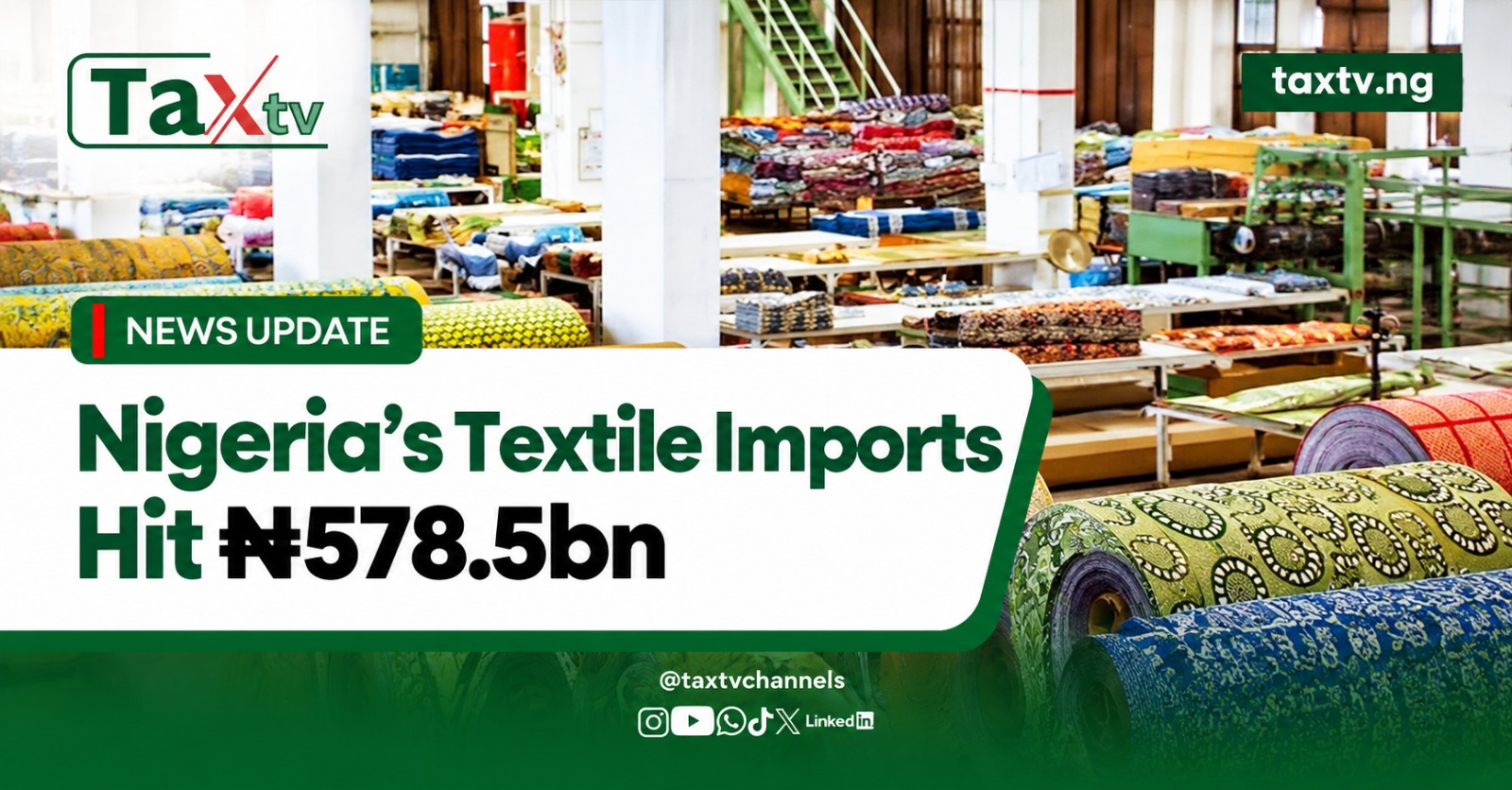
Nigeria spent ₦578.51bn on imported textiles and textile articles in the first six months of 2026, according to figures published by the National Bureau of Statistics, highlighting the country's persistent reliance on foreign-made textile products even as policymakers push to strengthen domestic manufacturing.
The half-year total represents a 2.2% increase from the ₦565.95bn recorded during the same period in 2025.
Although the growth was relatively small, the wider trend points to a sharp expansion in Nigeria's textile import expenditure over recent years. In 2022, textile imports stood at ₦365.46bn, before edging up to ₦377.47bn in 2023.
The pace then accelerated considerably. Annual textile imports nearly doubled to ₦726.18bn in 2024 and climbed further to ₦1.06tn in 2025. That translated into a 92.4% jump in 2024 and an additional 46.1% rise in 2025.
Set against those steep increases, the 2.2% growth recorded in the first half of 2026 marks a marked slowdown from the previous two full years.
Still, the latest data continue to signal sustained pressure on Nigeria's domestic textile sector and the challenge of reducing import dependence through stronger local manufacturing and production capacity.