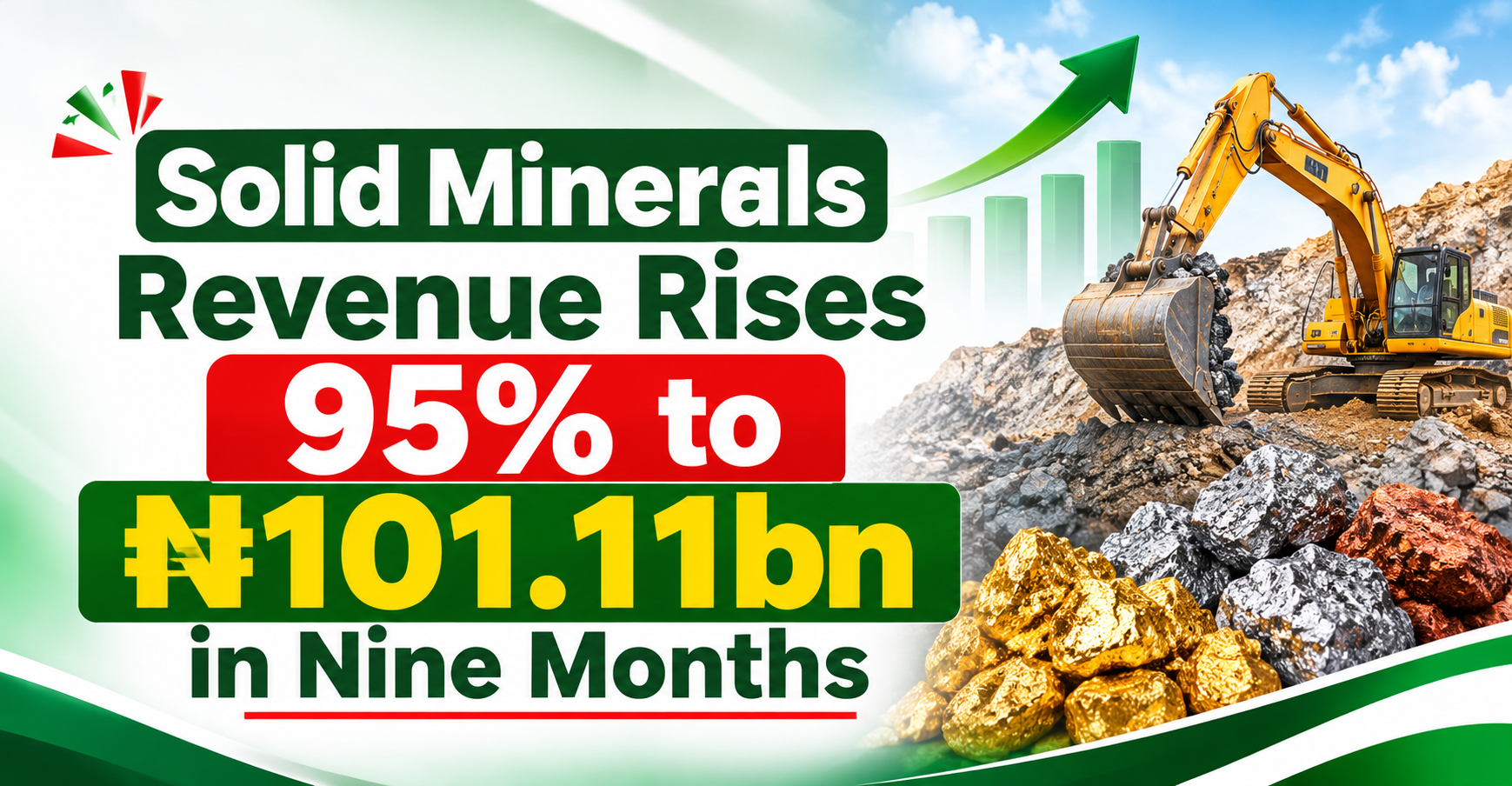
Nigeria's solid minerals sector contributed ₦101.11bn to government coffers in the first nine months of 2026, according to Central Bank of Nigeria data. The figure marks a 95.2 per cent rise from the ₦51.79bn recorded in the corresponding period of 2025, translating to an additional ₦49.33bn.
Mineral royalties were the largest driver of the increase, bringing in ₦66.12bn, or 65.4 per cent of total collections. Fees collected by the Federal Ministry of Solid Minerals Development amounted to ₦33.54bn, representing 33.2 per cent, while miscellaneous receipts stood at ₦1.45bn.
Monthly performance varied sharply during the period under review. July delivered the strongest result at ₦29.13bn, of which ₦25.78bn came from mineral royalties. Collections then fell to ₦8.47bn in August before edging up slightly to ₦8.78bn in September. June recorded ₦16.31bn, a 243.7 per cent jump from the ₦4.75bn collected in June 2025.
Minister of Solid Minerals Development Dele Alake linked the improved revenue performance to stricter regulatory enforcement, streamlined licensing procedures, and ongoing efforts to formalise mining operations.
The growth comes as the Federal Government works to broaden Nigeria's revenue base and reduce reliance on crude oil earnings. However, the uneven monthly collections point to the need for more consistent revenue administration and stronger oversight of mining activities if the gains are to be sustained.