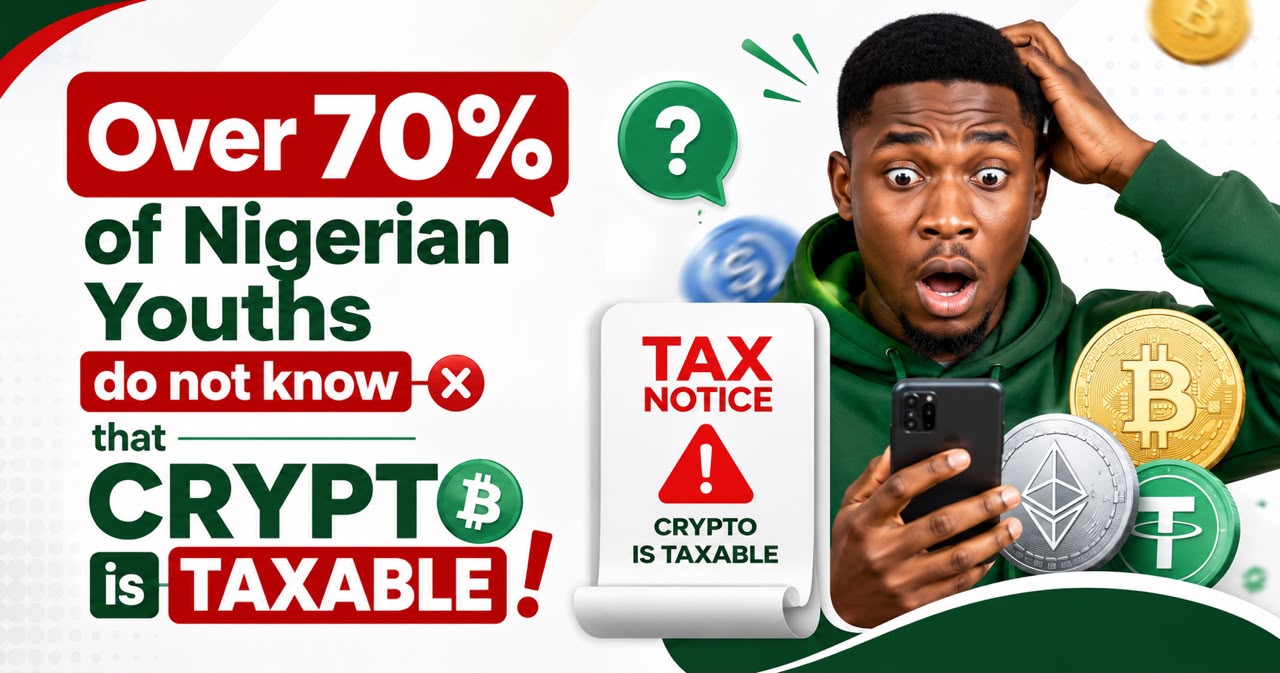
A recent survey has uncovered a significant disconnect between the growing use of cryptocurrency among young Nigerians and their understanding of the tax responsibilities tied to digital asset transactions.
The study, which polled 92 respondents between the ages of 18 and 33, found that 37 percent currently trade or use cryptocurrency, signalling that digital assets have gained a meaningful foothold in the financial lives of young adults. Yet participation has not translated into integration with the formal tax system.
A striking 70.7 percent of those surveyed reported that they do not possess a Tax Identification Number, while only 22.8 percent confirmed they have one. Another 6.5 percent said they were unsure of their status. These figures present a significant policy concern, as effective taxation depends on individuals being identifiable within the system. When a large share of participants operates outside formal registration structures, improving compliance will require more than enforcement — it will demand simpler onboarding processes, greater awareness, and sustained engagement with these users.
Awareness of crypto taxation itself remains low across the board. The survey found that 64.1 percent of respondents were unaware that certain cryptocurrency earnings and transactions would attract tax deductions under the new tax reform. An equal share — 72.8 percent — said they do not understand how crypto taxes are calculated, reported, or paid, and the same proportion indicated they do not grasp their responsibilities and obligations as crypto traders under the new law.
Perhaps most tellingly, 87 percent either do not know or are unsure which government agency is responsible for regulating cryptocurrency and virtual asset activities in Nigeria.
These numbers suggest that the primary barrier is not compliance itself but comprehension. A tax obligation can only function when individuals know what applies to them, how to comply, and where to turn for reliable guidance. For many young crypto users, uncertainty persists around basic questions: what transactions are taxable, how gains are determined, how activity should be reported, and who holds regulatory authority.
Beyond gaps in knowledge, the survey also surfaced concerns about transparency, fairness, and enforcement. Many respondents questioned how crypto activity would be tracked, how taxes would be collected, and whether revenues would translate into tangible public benefits. Open-ended responses reinforced these themes: 19.6 percent highlighted knowledge gaps and the need for basic explanations, 14.1 percent raised questions about calculation and reporting processes, 12 percent voiced concerns about fairness and perceived burden, and 8.7 percent focused on implementation and enforcement.