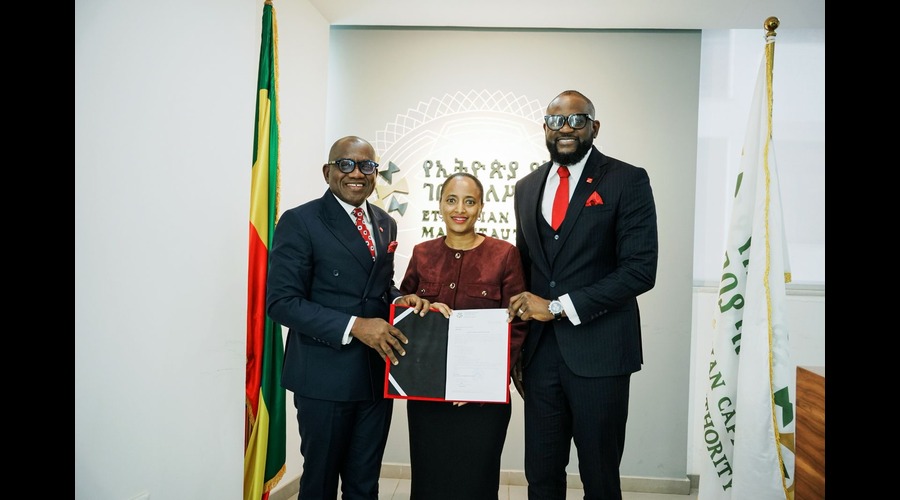
United Capital Plc has achieved a historic milestone by becoming the first foreign investment bank to secure an operating licence in Ethiopia, one of Africa's fastest-growing economies. Around the same period, the company also obtained regulatory approval to establish operations in Rwanda, significantly deepening its presence in East and Central Africa.
The Ethiopian entry is particularly notable. With a population exceeding 120 million and an ongoing economic reform programme, Ethiopia has long maintained a tightly controlled financial sector. The government's decision to gradually liberalise the industry has drawn global attention, and United Capital's successful entry positions the firm as an early architect in the country's evolving capital market ecosystem. The licence award reflects confidence in the Nigerian institution and validates the broader economic liberalisation agenda championed by Prime Minister Abiy Ahmed.
In Rwanda, widely regarded as one of Africa's most business-friendly destinations, United Capital is now authorised to provide a full suite of services including investment banking, portfolio management, trust services, and capital market advisory. Kigali has steadily transformed into a regional financial hub, and the approval strengthens Rwanda's position as a gateway for investments flowing into the wider region.
The dual-market expansion is underpinned by the philosophy of Africapitalism, a concept championed by Tony Elumelu, Group Chairman of Heirs Holdings, a major investor in United Capital. The doctrine holds that Africa's private sector must take a leading role in driving economic development, and that sustainable prosperity is generated when businesses commit to long-term investments that create both economic profit and social wealth.
Industry analysts note that beyond balance sheet growth, the expansion facilitates the transfer of technical expertise, professional training, and institutional best practices into new markets. It also reinforces Nigeria's leadership role within Africa's financial services landscape, as Nigerian institutions export innovation and investment solutions refined over decades of operating in one of the continent's most competitive regulatory environments.
United Capital's move mirrors a broader continental ambition reflected in initiatives such as the African Continental Free Trade Area, which aims to deepen economic integration, encourage cross-border investment, and build interconnected financial systems capable of supporting large-scale industrialisation.